Subscribe to Billion Dollar Backstory on Apple Podcasts, Google Podcasts, Spotify, or wherever you listen to podcasts.
“Be authentic.” “Own your story.” “Sharpen your edges.”
We say these things at Havener Capital all the time (and Stacy says them a lot). But here’s the real question: do they actually move the needle?
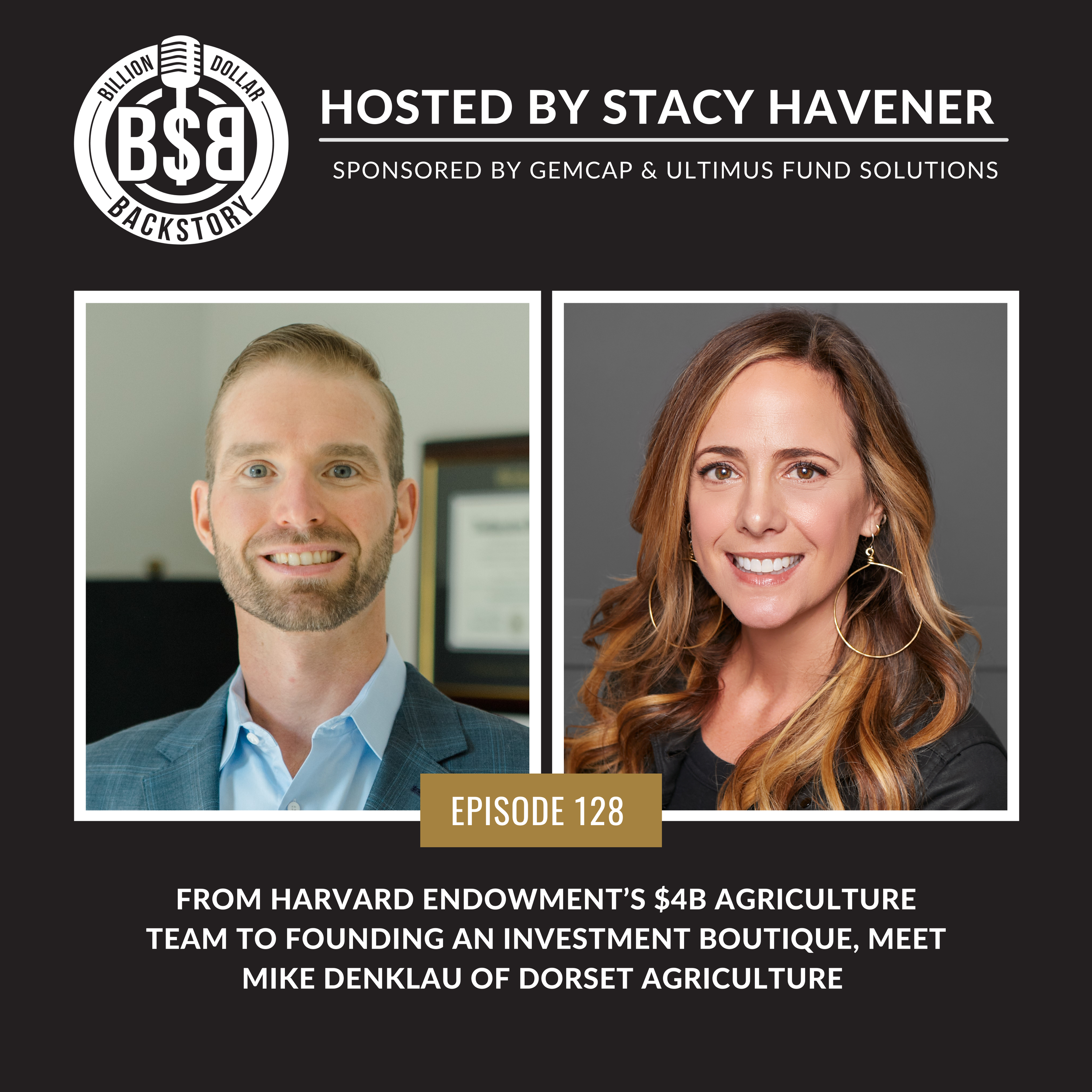
Mike Denklau, founder of Dorset Agriculture, is here to tell you they do. Today, he’s giving us a behind-the-scenes look at what happens when you stop code-switching… and start building from your real story.
Before launching Dorset, Mike was part of Harvard’s endowment, helping manage a $4B+ agriculture and timber portfolio. Long before that, he was an Iowa farm kid. The journey from flannel in the fields to fund meetings in Boston is full of lessons for any founder navigating identity, fundraising, and first-time firm-building.
Here’s what you’ll hear in this episode:
How a kid from Iowa ended up managing billions at Harvard and how that full-circle moment sparked Dorset’s launch
The overlooked opportunity in ag investing most firms ignore (and where meaningful, steady alpha may actually be hiding)
How Mike landed his first investor without a pitch and without trading his comfy flannel in for a stiff suit to fit in
Why boutique founders need to stop hiding behind polish and let LPs see the messy middle (because that’s where conviction is built)
What early-stage fundraising actually feels like and how to keep going when the uncertainty feels personal and loud
This isn’t just a story about agriculture.
It’s a case study in what happens when you own your different, build what the market didn’t even know it needed, and let your backstory do what it does best: open doors that fitting in never could.
More about Mike Denklau:
Mike was born into a third-generation farming family and raised on a farm in Iowa. He has 14+ years of investment and finance experience and was involved with $8B+ of transactions.
Prior to Dorset, Mike was an agriculture investor at Solum Partners and Harvard Management Company. Previously, Mike held investment and investment banking roles at Hudson Advisors, Barclays, and Lehman Brothers.
Mike earned a MBA and JD from Northwestern University and a BBA in Finance and a BS in Political Science from the University of Iowa. Mike is also a member of the Illinois State Bar Association.
Mike enjoys golf, skiing, and Hawkeye football. He currently lives in Boston with his wife, two children, and golden retriever.
Resources Mentioned in This Episode:
TRANSCRIPT
Below is an AI-generated transcript and therefore it may contain errors.
[00:00:00] Stacy Havener: Ever wonder if authenticity is just a buzzword that doesn't actually result in anything real? Be authentic, own your story, sharpen your edges. These are all things we talk about, and gosh, I talk about them a lot, but let's cut to the chase. Does it work? What does it even mean? Today's conversation with my friend and Haven or client, Mike Delow of Dorsett Agriculture is a case study in the journey of harnessing your real to generate real results.
[00:00:34] Prior to starting Dorsett, Mike was at the Harvard University's endowment, part of the team managing over 4 billion in agriculture and timber investments. It was a job that brought him full circle to his roots on an Iowa farm. And also brought him to a new chapter in launching his own agriculture investment firm.
[00:00:56] This is a story that has a powerful and [00:01:00] authentic why. I hope it inspires you on your journey to own your story, meet my friend Mike. Hey, my name is Stacey Er. I'm obsessed with startups, stories, and sales. Storytelling has fueled my success as a female founder in the Toughest Boys Club, wall Street, I've raised over 8 billion that has led to 30 billion in follow-on assets for investment boutiques, you could say against the odds.
[00:01:31] Yeah, understatement. I share stories of the people behind the portfolios while teaching you how to use story to shape outcomes. It's real talk here, money, authenticity, growth, setbacks, sales and marketing are all topics we discuss. Think of this as the capital raising class you wish you had in college mixed with happy hour.
[00:01:56] Pull up a seat, grab your notebook, and get ready to be [00:02:00] inspired and challenged while you learn. This is the Billion Dollar Backstory podcast.
[00:02:10] Let's be real. No one wakes up and says, I can't wait to build some operational infrastructure today. You are here to manage money to build something that lights you up, not chase down reports across five systems and 15 service providers. That's where Ultimas Fund Solutions comes in. They're your ops dream team, consolidating all your middle and back office chaos into one clean, scalable setup, registered funds, private funds, SMAs, all integrated, one team, one tech platform, one rock solid source of data.
[00:02:48] But here's the real differentiator service. I know that Fund in a box sounds convenient. It's also a box. Know what? You can't put in a box? A [00:03:00] human who picks up the phone when you call and need help. Real life people who know your name and your fund, and they care about getting it right. Ultimas was built on people doing business with people.
[00:03:12] You get institutional strength combined with boutique level service without getting stuck in a phone tree of doom. If you're ready to simplify scale and start working with a team that feels like an extension of yours, check out billion dollar backstory.com/ultimas. That's U-L-T-I-M-U-S. You've got the investment strategy, the vision, the track record.
[00:03:40] Now it's time to upgrade the engine behind it all with Ultimas. Mike, thank you so much for being here and fun fact, we were just together in person in Newport last week, so this is kind of like a reunion. You know, in less than seven days here we're, we're back together.
[00:03:59] Mike Denklau: We're [00:04:00] like old friends now. It's amazing.
[00:04:01] Yeah,
[00:04:01] Stacy Havener: it's, it is. It's amazing. It's two friends having like a, a cup of coffee catching up on a podcast. My favorite, so. You have a fantastic backstory, which you practiced with allocators last week in Newport. I'd love for you to take us through it, and I want you to go way back. I want you to go back before your career and talk about your childhood and where you grew up.
[00:04:25] Mike Denklau: Yeah, perfect. Thanks Stacy, and thanks for having me on. It's, it's amazing to do this with you and last week in, in Newport was incredible, so thank you for that as well. Yeah, there's really kind of a two part story here to how I ended up doing what I'm doing now. And the first part, as you said, goes way back to where I grew up.
[00:04:42] I, I grew up on a, a farm in eastern Iowa, um, third generation farming family. Uh, it was really, you know, kind of the, the family passion was agriculture. Um, we, we raised livestock. We had, uh, row crop operation. Unfortunately, it, it was a bit too small to make a full-time, uh, career out of, [00:05:00] in particular as my dad was thinking about, you know, trying to, to move more into farming as a job full-time.
[00:05:07] My grandparents passed away and, and the farm was up for sale. Uh, and unfortunately my dad just didn't have the, the money to purchase the whole farm. You know, he was one of five children, um mm-hmm. And so, you know, things were divided, uh, too far and he was stretched too far. And, and so we missed out on that opportunity and, and, you know, left us in the position where we couldn't transition to, uh, you know, making farming a career, so to speak, you know, which, uh, I guess in turn Led, led me to, uh, a path, uh, headed into, to finance, uh, as a career in instead of, you know, staying, uh, in the agriculture space.
[00:05:40] Stacy Havener: Do you think that spark of finance was because of the money issues that you saw your family going through? Like, was that a little bit of a, a spark for you in how important sort of finance and, and capital really is?
[00:05:56] Mike Denklau: Uh, you know, definitely I. I [00:06:00] wish I could say I had that epiphany. Yeah. You know, this wasn't all a great grand plan, unfortunately.
[00:06:04] Yeah. I would say more is that my parents encouraged me to do something really stable. So they were kind of pushing, yes, go be an accountant. Got it. There's always a job for accountants, right? Is that what you went
[00:06:12] Stacy Havener: into?
[00:06:13] Mike Denklau: Uh, yeah, I was an accounting major for a semester and then I decided, hey, this is, this is not for me.
[00:06:19] This is kind of boring. And I did transition then to, to finance where I did find, you know, more interest in, you know, thinking about, you know, the numbers side of things, but from a financial perspective versus just the, the debits and credits. And honestly, I was, I was very fortunate, uh, a lot of my good friends who were also, you know.
[00:06:36] Generally farm kids from Iowa. We were all at the University of Iowa and some of 'em started going into investment banking. Um, oh, I, I'd honestly, you know, other than seeing like movies, right? I'd never heard of Wall Street. I didn't know any, have any idea what any of anyone did there. And also a couple years later, yeah, I'm working at Lehman Brothers and, you know, it was just like a life changing sort of thing, right?
[00:06:55] Um, but yeah, there was this whole world I had no idea about even later when I landed at the Harvard [00:07:00] Endowment. Like, I mean, Harvard was like the only Ivy League I probably could have named, you know, growing up. Right? Yeah. I just didn't know these things. Um,
[00:07:06] Stacy Havener: so, and had you put, had you put farming, like going back to like, it all makes sense now when we look back, doesn't it?
[00:07:13] But to your point, like it's, it's never like a grand plan that, you know, is perfectly linear. So at this point, when you're at Lehman, you're on Wall Street, have you kind of like put agriculture. On a shelf, so to speak, as I look at your John Deere tractors behind you, like, or was it still swirling around for you?
[00:07:32] Mike Denklau: Yeah, um, you know, it was swirling a little bit. I, I can tell you when I got that first bonus check, uh, at, at Lehman, I, I did look at the, the listings of farms back in Iowa. It was sort of a nostalgia thing of like, oh, what could I do with this? And unfortunately, it was just a little too small to really buy anything that was, that, um, you know, I would've had to buy like really poor farm ground in a not ideal situation to, to have anything of any size.
[00:07:55] And so I, I didn't pull that trigger, but definitely it was a thought. And then, yeah, you [00:08:00] know, I guess it kind of faded there, uh, after that for a little bit.
[00:08:03] Stacy Havener: But then when you land to Harvard, it comes back full force. And was there a con, so talk about that and, and was this something you applied for or did they find you, or how did the Harvard Connect happen?
[00:08:14] Mike Denklau: Yeah, so, uh, I went to grad school after banking, uh, at Lehman or, uh, went from Lehman to Barclays to grad school, Northwestern, and, and then moved into private equity. And, uh, I was originally at a, a large private equity fund, uh, in Dallas and was looking to, to make a move from there. And, uh, found this, this Harvard, uh, job posting, to be honest with you.
[00:08:34] And it sparked my interest. 'cause to me it spoke kind of the two things. I, well it had investing on one hand and it had had, you know, agriculture on the other. And I didn't even, I knew real estate was an asset class, right? Yeah. And, and I worked at a firm that had a real estate investment team, but no one ever talked about agriculture as an investment class.
[00:08:52] And so, you know, I was really excited to see that. And, you know, I was very fortunate that some others at at Harvard agreed that, hey, kid from [00:09:00] Iowa who does finance can probably do this job.
[00:09:02] Stacy Havener: And talk about, because I think to your point, you're not the only one who didn't realize that agriculture was as.
[00:09:10] Interesting. Real of an asset class as it was. So when you went to Harvard, like give us the landscape, like you went, you joined this team that was working on agriculture, like size it up for us.
[00:09:22] Mike Denklau: Yeah, so, you know, it was an interesting time. I, I joined as they were rebuilding the team. Uh, I think I was the maybe fourth hire as they were rebuilding that team.
[00:09:30] It was about a $4 billion portfolio at the time between timber and agriculture and uh, yeah, we were in a restructuring phase, to be very honest with you. Yeah. Which, yeah, which, you know, I think was amazing 'cause it really accelerated the learning curve, so to speak. Right? You got to see kind of the whole life cycle of, of these investments.
[00:09:47] I mean, we were making some new investments, but obviously we were spending a lot of time with, with things already in the portfolio of how do you position something, how do you exit something, what are the good assets, what are the bad assets? And seeing what went wrong and what worked. Mm. [00:10:00] So, you know, it was kind of a, an amazing several years of, of really getting to dig in and, and, you know, learn what can happen in a portfolio both from a good and a bad perspective.
[00:10:10] Stacy Havener: I can only imagine your face, like when you went to the first investment, did you get to go, like, kick the proverbial tires of these farms and were you just like cheese grinning ear to ear when that happened? Like how amazing.
[00:10:25] Mike Denklau: It was definitely amazing. I, I was trying to control my grinning, but yeah, I mean, I, I traveled a lot, uh, yeah.
[00:10:31] Across the US and, and internationally as well because we, we were a global portfolio. But I think when it really hit me was when I got to go back home for the holidays to Iowa and, uh, I was working on like the first big new deal for the portfolio and I, I showed my dad the pitch book that I had put together and, you know, he, he literally like sat there in his chair, like, you know, where he would sit to read the newspaper at night, but he was like flipping, you know, my deck and, and looking at this.
[00:10:58] It was a, an apple business. They [00:11:00] were growing and packing and selling apples and yeah. That really resonated with him. Wow. You know, it was like, I think all the other finance stuff I had done, like. They didn't really get it. They cared, but obviously like it, it didn't, didn't mean a lot to them, but all of a sudden this was like really tangible.
[00:11:17] Wow. And, uh, kind of, you know, full circle went, you know, hit, hit home I guess, if you will.
[00:11:21] Stacy Havener: All the levels on that phrase. Um, okay, so how do you go from what sounds like a really amazing time at Harvard to deciding you're gonna take this crazy? And I say that with, with peace and love. 'cause I'm, I'm crazy too.
[00:11:37] This crazy leap into entrepreneurship. Like kinda fill in that. That part of the timeline for us.
[00:11:44] Mike Denklau: Yeah. You know, so obviously as I said, the great learning experience and, and you know, a couple things I started to notice in the market, particularly as I was looking at deals and talking to other investors, right.
[00:11:54] And uh, you know, one thing I noticed for, from the investor side was there were a lot of people that [00:12:00] quite frankly had had a bad experience in agriculture. Ah. Um, and, you know, some of our Harvard portfolio reflected that bad experience. And so it got me thinking, you know, is there a way to do this differently?
[00:12:11] And, you know, some of the things I saw that worked well, we, we had one or two investments where we just owned an asset and we leased it out. And those performed quite well. They, they kind of hit the, you know, the cash flow expectations and were solid investments. And then there were other deals where, you know, we were taking full operational risk and, you know, in farming there's, there's a plethora of variables, many of which you have no control over, right?
[00:12:33] Weather markets, pest disease, et cetera. And, and so when you're taking all of those risks in an asset heavy capital intensive industry, you know, it can be challenging to make that private equity model work all the time. And so that, that kind of got me thinking about, you know, is, is there a different way to approach this?
[00:12:53] You know, the other thing I saw being the size we were at Harvard, and I think this is, you know, the case for a lot of the, the funds that focus on the space, [00:13:00] you know, deals under $50 million. Generally, no one wanted to get off the couch to look at that. And so I watched all these smaller deals kind of fall away.
[00:13:10] And, and maybe case in point for you, it was during COVID 'cause I remember mm-hmm. Sitting in my kitchen pitching this deal. I, I had a, a date farmer in Southern California. They were packing and selling fresh, uh, dates, and they wanted to acquire a packing and processing facility and some additional date orchards.
[00:13:28] And then they would add, with that, they would add sort of a, a processing, you know, component to their business. Um, 35 year legacy business, cash positive, you know, all, all the things you'd like to see in a, in a really stable business to buy. And, um, this farmer who was looking to acquire that, they just wanted a capital partner.
[00:13:45] They were looking to preserve their growth capital. They wanted someone who could just own the real assets, lease 'em back to them, and that would be their way to sort of minimize the cash outflow that they would have. Um, they were offering 7% fixed cash [00:14:00] lease. Uh, you know, at a time you could probably borrow for less than 3%.
[00:14:03] Right. Wow. So a really nice spread on the lease. Yeah, you have upside in the assets. Really solid tenant owned by a ultra high net worth family that you would know if I said the name. You know, it was just all these great dynamics. But I couldn't get my team on board because they said, you know what? We don't do own and lease anymore.
[00:14:19] We are a private equity model. We have to direct operate, we need to own part of the operations. And, uh, you know, that's just not what a lot of farmers want. Um, some do, but you know, many of the really good ones in particular, um, they don't want someone else in their business. You know, they like being their own boss.
[00:14:35] And, and sorry to keep telling you stories, but I I, one more story to hear that. No, I love you. Hello.
[00:14:38] Stacy Havener: That's the podcast. We hear our stories all day long.
[00:14:42] Mike Denklau: Uh, you know, another story that that was really influential for me when I was thinking about this idea around this own and lease concept was a, actually an advisor for my fund.
[00:14:51] He's a, a long-term friend in the industries, an Apple grower, very well respected, uh, large business. And, uh, I had been pitching for years. [00:15:00] I, I, I kept telling him, I said, Michael, you've got all this excess capacity, your packing facility. We at Harvard, we have this, this really large, you know, 2,500 acre orchard.
[00:15:09] Why don't we just partner on a deal, you're gonna make, you know, X millions of dollars more. And to me, I'm like, wow, the spreadsheet makes a ton of sense, right? The economics are like hitting you in the face and he just would hem and haw and never say yes, never say no. And then finally one night over dinner, he look, looked at me in the eyes and he said, Mike, you don't get it.
[00:15:26] Every morning I wake up and I look my boss in the mirror. I don't want that to change. And, and that was kind of when it finally resonated with me of like, Hey, it's not just the dollars and cents in agriculture. Uh, there, there's a lot more to it than that. There's family dynamics, there's, you know, community dynamics and you gotta think about all those aspects when, when you're active in the space.
[00:15:46] And so, you know, that was another sort of component of how we came to, to what we do. And then going back a little bit to what I was saying about, you know, maybe investors not seeing exactly, you know, what they're looking for or having bad experiences. You know, when I looked across the [00:16:00] spectrum of opportunities, there was kind of the private equity model, which was what we were moving towards, which.
[00:16:05] Higher risk, higher return. And then your other alternative was to go to like the opposite end of the spectrum. And you go basically to like buying, you know, treasuries, you know, it's, uh, you know, there's quite a few, uh, funds that do this and they, they buy and lease out farmland for generally cash rent or maybe a crop share.
[00:16:22] But think about where I grew up, right? You go buy Iowa farmland, you make two to 4% lease rate and, uh, you, you sit on it and hope it appreciates and, and you know, that's great for some people, right? If you're an insurance company and you need 4% cash yield, like that can work really well. But there was nothing in the middle.
[00:16:39] And not only from a return perspective, but a risk perspective. And then also thinking about, well, how do you go beyond just risk and return, like cash yield and tax efficiency? And those were all things that like I just saw weren't being offered. And, you know, those combined. And I'll be very honest, I was thinking about all these things, but I had no idea how to actually [00:17:00] do this.
[00:17:00] Um,
[00:17:01] Stacy Havener: none of us do. Mike,
[00:17:03] Mike Denklau: I was very fortunate. A friend runs a multi-family office, uh, here in the Boston area, and I had reached out to him and I said, look, I wanna make a move. Don't know exactly what it is, would just love to get your thoughts and maybe some help networking. And we sit down at lunch and he is like, look, I'm happy to do all of that, but before we even talk about that, what if I can help you start your own thing?
[00:17:26] What? And he's, he looks, he looks at me and he basically says, what I was just describing, he says, look, we've seen a lot of agriculture investment opportunities, but we don't like any of them. None of this really fits our model. We want something with consistent cash flow. We need it to be tax efficient.
[00:17:41] And by the way, we're all about wealth preservation, so we need it to not be super high risk and, and have, you know, sort of these, uh, downside protections in place. And oddly enough, that just kind of happened to. Fit really well with what I was thinking about doing. And you know, it, it was, uh, it was a very soft commitment out of the [00:18:00] gate, but you know, it's been great when we continue to grow our relationship together to, to build out the fun
[00:18:05] Stacy Havener: I want to.
[00:18:07] So this is fantastic stories, Mike. My goodness. Thank you so much for letting us really see a, this is an interesting part of industry, the market. I mean that you just don't really stop to think about, like, these stories are fantastic, but what I wanna put a pin in for people, I really want them to like hear this loud and clear, is when Mike talked about this meeting with the multifamily office friend, it wasn't to pitch him.
[00:18:37] It was for help, it was for advice, which goes to the saying that I, I will keep, I, I'm gonna die on the hill. That especially in the early days, if you ask for money, you get advice. If you ask for advice, you get money. And people want to help, but people [00:19:00] don't want to be sold. So when you ask for help, which is what you did, the person on the other side of the table could decide where they wanted to take that.
[00:19:11] They didn't have to say, Hey, what if I helped you start this? And what if we partnered together? They didn't have to do that, but you didn't, you didn't force their hand, you didn't make them confront that they got there on their own. And I think this is just a, a wonderful reminder of people do business with people.
[00:19:28] And that's really how it starts.
[00:19:31] Mike Denklau: Yeah, I, I couldn't agree more, Stacy. It, it was incredible how the relationship started and continues to grow and how supportive they've been, and, you know, we're trying to replicate that with your help, you know? Yeah. I, I, I, I wish I'd realized all of that at the time. It's been certainly a journey to, to realize that that was the better take.
[00:19:50] And, and, and I'm sure you see this all the time, right? A a lot of friends were also giving me kind of the boiler room pitch, right? Of go out there and sell. [00:20:00] Um, and it just wasn't me. It didn't fit, it didn't feel right. Um, yeah, and it didn't work at the end of the day. It just didn't work. Doesn't,
[00:20:08] Stacy Havener: yeah, it doesn't.
[00:20:09] And, and also it's not very fun, is it?
[00:20:12] Mike Denklau: No, it's painful. It's painful. Absolutely painful. Yeah. Yeah. For everyone. And I don't think it's fun for, for that, for the other side of the table. And it certainly wasn't fun for me. Nobody's
[00:20:20] Stacy Havener: having fun. The founder's not having fun, the investors aren't having any fun.
[00:20:24] It's just, and it's, you're sort of like, this is not why I got into this business. Yeah. And the reality is, even though this is a massive oversimplification, but it's true, we make it so much more difficult and so much more complicated than it really is. Because what's interesting is if you really went back to that dinner and you thought about how much did you prepare, what did you bring with you?
[00:20:46] What, what did you go into it, you know, wanting to talk about what was your agenda? All this stuff that you'd think about if it was a pitch, my guess is you didn't do any of that.
[00:20:55] Mike Denklau: No, I, I didn't have a, I didn't have a pitch book. I mean, it was just an idea. Right. [00:21:00] You just went to have dinner.
[00:21:01] Stacy Havener: Yeah. And so that vibe I want you to carry with you in conversations.
[00:21:08] Now the other thing I'm putting you in a little bit in a hot seat, you know, I like to do that, but it's fine. We're friends and we're all friends here. Even the listeners, we're all friends. So did this person that you had dinner with from the multifamily office, did they know you? I know the answer to this, but I'm just, did they know you, did they know you were at Harvard running, you know, this money when you went to them to say, Hey, here's what I'm thinking about doing.
[00:21:33] Mike Denklau: Yeah, we had known each other for years. I mean, they, they knew my background from Harvard and where I grew up and Yeah,
[00:21:39] Stacy Havener: exactly. So in a weird way, even though you didn't tell them your backstory, they knew it.
[00:21:46] Mike Denklau: Yeah. That's a good point.
[00:21:48] Stacy Havener: They knew it. And so this is amazing. Okay. So you decide that you're gonna launch Dorsett, and what was the vi, like the vision was to go into that white space that you saw, that you [00:22:00] described to us, like in between the two options that basically investors had.
[00:22:05] Is that right?
[00:22:06] Mike Denklau: Yeah. And, and, sorry. I often think about things in kind of twos. Yeah. Because I, I view myself as having two clients. One was investors and the other one is farmers. And so, ah,
[00:22:15] Stacy Havener: love that.
[00:22:15] Mike Denklau: You know, I, I think as I told you, there was the white space for the investors mm-hmm. Um, of, of the middle ground here, but then there was also the white space for the farmers on Ooh.
[00:22:25] You know, just being bypassed because their deal was too small or they didn't wanna sell a piece of their operating business. And so, you know, we were also like, or people just wouldn't invest in their type of assets. Right. Right. So one of the things we do is we invest in, we'll invest in any real asset related to the farm.
[00:22:42] Most people won't go into things like infrastructure, which we will do with the idea of being able to be a full service partner to, to the farmer, you know? So that, that was just some examples of areas we were seeing where that client wasn't being serviced. And quite frankly, it kind of full circle here.
[00:22:58] Right. Brings me back to that [00:23:00] feeling of, well, what if my dad had been able to find that person that had the smaller check that, you know, would've been enough for him to, you know, get control of, of the family farm, right? Yeah. And, and so it brings back a little feeling of that. And, you know, not to say we always play on that story, but you know, there's some deals in our pipeline right now that have that flavor of story.
[00:23:21] Wow. And, you know, we're helping family farmers out. Right. One, one deal we're looking at right now is grandson who had been farming a property that he bought with his grandfather, and grandfather passed away. And now, you know, other family members are looking to exit the farm and take the cash. And so, you know, we're trying to figure out a way if there's, I love it.
[00:23:41] A way to keep the grandson on the farm, obviously we're, it's
[00:23:44] Stacy Havener: meaningful.
[00:23:45] Mike Denklau: Yeah. Yeah. It's, and look, we're not an impact fund. Yeah. I don't wanna overemphasize that, but there is sort of this added component to what we do of, you know, we do at the end of the day, oftentimes have an impact on family farms and, and rural communities.[00:24:00]
[00:24:00] So, uh, you know, it's, it's kind of the gravy, I guess you, you could say on top of what I think is a really interesting return profile.
[00:24:07] Stacy Havener: So, interesting. I mean, we talk about differentiators a lot and we've talked with you, uh, you know, as a, as a client of the firm about differentiators. It's interesting, sometimes, sometimes there are asset classes or there are certain types of strategies that have embedded differentiators in them.
[00:24:26] Right. Which, what you're doing does, because you're sort of saying, look, the big firms can't even touch some of these deals. They don't want these deals for various reasons. So you kind of have a lot of embedded differentiators just in. The firm's DNA. But when you think back to all the stuff in air quotes that you saw on the other side of the table, right?
[00:24:47] 'cause you were an allocator in some ways, an asset owner. So you saw I'm sure incredible deal flow and lots of good and lots of bad as you said. Are there other things that jump out to you as differentiators besides what we've, like [00:25:00] what's embedded in the DNA of Dorsett?
[00:25:03] Mike Denklau: Yeah, definitely. You know, one is, is sort of our, our, just our structure itself.
[00:25:07] And we tried to design ourselves to be intentionally designed ourselves to be different. Um, so we're, we're set up as a, a hybrid fund structure. So it's open-ended with a redemption option after several years. And, you know, there were a few reasons why we did that. One, our, our farming partners are, are often thinking in terms of generations, right?
[00:25:27] Mm-hmm. It's, you know, dad thinking about children or grandchildren and passing down the legacy that doesn't fit very well with, uh, hey, we have a 10 year closed end fund and after five to seven year hold periods we need to think about an exit. Right? That's tricky. You know, additionally, it's inevitably farming goes through cycles.
[00:25:46] You know, no matter what crop you're in, there are cycles. And I wish I could tell you I'm gonna go buy farmland in the Midwest before Russia invades Ukraine. You know, again, and, uh, somehow I'm gonna find that that nugget, right? Like, [00:26:00] who knows? You might get lucky, but I don't think that's like a, a strategy to build a firm around, right?
[00:26:05] And so, you know, we're looking at how can we set ourselves up for long-term success? And so, you know, having the, the longer term view allows us to think more about finding really good quality assets, and then we'll be opportunistic, uh, about those, those exits when the market, you know, uh, provides them. Or, you know, I ideally our, our tenants, you know, become our exit, right?
[00:26:26] Um, which is, is a, is a great scenario for us. You know, that that fund structure also helps with our tax efficiency. Um, you know, I mentioned one component is we buy these, these assets that are depreciable, right? Whether that's a cold storage building or a processing facility or an orchard that adds, you know, tax, uh, efficiencies for us.
[00:26:45] But with this longer term view, we can also think about things like 10 31 exchanges. And so, you know, we could exit one investment and reinvest that money without triggering a capital gain. And so that I think is another really powerful factor of, of our [00:27:00] structure. Uh, and then finally, you know, I think it allows us to build a bigger portfolio, more diversified portfolio of these small deals.
[00:27:06] So it reduces our risk profile and, you know, also reduces our expense load, uh, as we grow this thing. So that's probably one of the, you know, it's a complicated one to explain, but I think it's a really powerful component of what we do. I love it.
[00:27:20] Stacy Havener: The other thing I like about it is typically when you hear people talk about fund structure, they're talking about it for the actual allocator, which makes sense, right?
[00:27:30] You want it to work for the allocator, you want them to have the ability to get out if they need to get out, et cetera. What I like here is that's not the only thing you were thinking about. I love the part about the, the timeframe. Of, of sort of your investments, if you will, that these farmers are not thinking about five years, 10 years, they're thinking about generations.
[00:27:52] And that's just an incredible alignment in my opinion, on both sides. You know, the side of the allocator of [00:28:00] course, but also the side of the, of the farmer or you know, the group that you're partnering with, which I think you don't often hear.
[00:28:09] Mike Denklau: Yeah. Yeah. I, I think we, we tried to be thoughtful in building things to service, you know, what we view as both of our clients.
[00:28:16] Yeah.
[00:28:16] Stacy Havener: And
[00:28:16] Mike Denklau: like at the end of the day, it's not perfect. Right. But, uh, I do think it's, it's much better than, than the other options that are out there.
[00:28:23] Stacy Havener: And you call them clients, that's the second time that you've said that. So you call the farmers' clients?
[00:28:28] Mike Denklau: Yeah. Or partners. Um, or partners. Okay. Either way it's an interesting
[00:28:32] Stacy Havener: mindset shift really, to be honest with you.
[00:28:34] I love it. I mean,
[00:28:36] Mike Denklau: look, quite frankly, we couldn't do what we do without them, right? Yeah. Um, they're, they're critical to our business. And, um, you know, every time we look at a deal, you know, some stuff I'm working on right now, I'm going back and forth with the farmer and saying, Hey, here's my model of the economics.
[00:28:51] Like, is, does this agree with how you view the farm? Because let's get on the same page first. Do we agree that this is the cash flow and can we set up a structure [00:29:00] that we're both gonna make money off of? Because it has to work for both of us. If, if I'm just trying to squeeze everything out of that farmer, the deal's not gonna work out, right?
[00:29:08] No. And, and it might look great in an Excel model, but two years from now and the guy realizes he is not making money, it's not gonna work. Uh, right. And so, you know, our approach is, Hey, let's, let's be a friendly, uh, friendly capital partner. Let's be a real partner, help these farmers achieve their goals, and, and in turn, that's gonna help us achieve our goals.
[00:29:29] Stacy Havener: It's funny because in my head, as you're talking, and, and I wanna, this is, this is a spin on sort of the qualitative and authenticity piece. 'cause in my head as you're talking, I'm picturing you talking to this farmer and I'm thinking about the alternative scenario, which is some Wall Street private equity, bro comes to talk to this farmer in all the, just take like the most stereotypical finance bro you could think of, right?
[00:29:56] Private equity person who comes talk to this farmer. And I, I put myself [00:30:00] in the farmer's shoes. I'm like, hell no.
[00:30:03] Mike Denklau: Yeah. This is
[00:30:03] Stacy Havener: not my person. Right. And so I wonder is that, do you feel that, do they feel like you get them because of your, you know, your background?
[00:30:15] Mike Denklau: Yeah. I, I do think that's, that's absolutely true.
[00:30:17] And, and look, there are some people out there that are just trying to get a deal done at any number and yeah, they don't care where the money comes from. Right. And, and so they're probably not for you. Yeah, they're not for us. And that Wall Street person will get that deal. Yeah. And that's fine. But yeah, no, it, it does really resonate with them.
[00:30:32] And, you know, quite frankly, it's, it's a multiplier effect for us too. Right. It's not, not only just like that one deal we're looking at with that farmer, it, it becomes sort of the factor of, hey. Mike did right by me in this deal. Or even if we didn't close a deal, we at least had a, a very, you know, pleasant conversation about a deal.
[00:30:51] And they bring us more things, whether that's theirs or their neighbor or their friend. And so all of a sudden, you see, even though we're a small team, there's this whole network of [00:31:00] farmers out there that kind of become part of our team in an informal capacity. And, you know, they bring us other deals.
[00:31:05] They, they help us with diligence, uh, on farms or thinking about ideas. And, and so it's just, I think it's just really powerful and, and the only way you can have that ability is to do things the right way
[00:31:19] Stacy Havener: and do things the right way and show up as who you are authentically, which we talked a little bit about in the Green room, and I wanna kind of come back to that conversation.
[00:31:28] You know, we didn't have the camera recording and I was like, oh no, wait, I want this, like in the podcast, because you sit in front of me in a flannel shirt. You said you have cowboy boots on. Um, I want you to talk about that journey of authenticity, because also you were on Wall Street and you were at Lehman, and you were at Harvard, and that's, those are some fancy, you know, some fancy things going on there.
[00:31:49] How has this journey of authenticity been for you?
[00:31:53] Mike Denklau: Yeah, it, it's funny, and I think it took a lot of your help to figure this out, Stacy, but, um, you know, like I've been saying, I, I kind [00:32:00] of view, we have, you know, two sets of partners, the, the farmer and the investor, and I didn't even realize it until probably the, the event in Newport last week.
[00:32:07] But I kind of been approaching those two groups differently. Mm-hmm. Um, immediately when I started thinking about the idea of Dorsett, I mean, I was going out to the farm and I was dressed like this, right? I, I had my boots on and, and jeans and, you know, flannel shirt and uh, maybe an Iowa football cap. I mean, and you know, it was just playing the part of being from Iowa and talking about farming and uh, having a normal conversation with folks and then.
[00:32:32] When I'd go get in front of an investor, I'd put on the suit and tie and pull out my pitch book and wouldn't really talk about the Iowa thing, you know, on the farm. I would open with being from Iowa and then I'd get in this meeting and I'd open with, uh, Lehman Brothers, Harvard, you know? Mm-hmm. Resume, right?
[00:32:47] I'd start going through the resume and finally it hit me like, why am I doing this? The thing that resonates is what's happening on the farm
[00:32:55] Stacy Havener: and doesn't it feel better? Not that, I mean, we [00:33:00] all have different sides to us, and so look, it's not that like, you know, there's only one side of Mike and it's flannel and, and cowboy boots in the Iowa cap, right?
[00:33:09] We all have sides, but the authenticity of realizing that it is okay to show up as who you are, and actually sometimes the parts of our story or of us that we feel like we want to downplay or hide are the exact things that someone would love if we let them see.
[00:33:31] Mike Denklau: Yeah. I, I think that's a great point.
[00:33:34] Stacy Havener: And we all do it.
[00:33:35] It's human nature. It's like the quirks, the, the bits of the story that don't make sense. It, it's kind of like that saying of sometimes we feel like we, we tell people what we think they wanna hear, or we show up as who we think they want us to be.
[00:33:55] Mike Denklau: Yeah. E exactly. Like
[00:33:56] Stacy Havener: here's, you know, central casting fund manager, [00:34:00] okay, Mike, that's, you go.
[00:34:01] Right? And the reality is there's a million of those people, like there are a diamond, dozen wall street's crawling with them, right? Allocators get so many of these people in their conference rooms every day. And so, how are you gonna stand out? Not meaning you but us. How are we gonna stand out if we just all play the part?
[00:34:23] Mike Denklau: Yeah, yeah, exactly. And I mean, I think that went from just, you know. Being myself and not trying to, to fit in different shoes all the way to like, even simple things, right? Our pitch deck, uh, you know, it, it looked like something I would've made a, you know, a big private equity fund or an investment bank, right?
[00:34:40] Uh, it was all charts, you know, dense words, not very appealing. And then, I'll be honest, it was, I didn't appreciate it, but I had a family office early on that, you know, prodded me on, Hey, like, this is hard to get through. And then finally working with your team, I was like, oh, yeah, yeah. I like, I was so far off in the wrong [00:35:00] direction.
[00:35:00] Like, no one wants to look at that. They, they wanna understand, like your team, your background, what you're doing. Yeah.
[00:35:06] Stacy Havener: You're, and what you're building. Wouldn't it be cool if you could diversify your investor base and add some non-US investors? Europe could be fun, or Latin America, maybe Antarctica. Hey, icebergs aren't really my jam, but you never know.
[00:35:21] You've only got one problem. How the heck do you do that? Fair question, but maybe this is a who not how thing. Meet my friends at Gem Cap. Not only do they handle all the back office stuff, the how. They'll also solve the who in your distribution conundrum. They have an incredible network of distribution partners who can help you sell the thing.
[00:35:47] Once you've built the thing and Gem Cap won't just help you launch globally, they'll tell you where to go and maybe more importantly, where not to go. Saving you time, money, and annoying headaches. [00:36:00] Want to find out if your investment firm is ready to go global? Visit billion dollar backstory.com/gem cap, G-E-M-C-A-P.
[00:36:12] We've created a quick quiz that'll help you figure out if you're ready to expand beyond the US And side note, it's pretty fun too. Get your firm in front of the right investors in the right places with Gem cap. Take the quiz and get more info@billiondollarbackstory.com slash gem cap GE. M-M-C-A-P.
[00:36:38] I think this is another part, and I wonder how this has resonated for you in your conversations, because when you first start out, we all as boutiques have to go up against the idea that you don't get fired for hiring IBM. Okay. And a boutique, or you know, an emerging manager or startup. We are not, IBM, we're the farthest thing from [00:37:00] IBM.
[00:37:00] Okay? So for somebody to take a chance on us, that's a real risk for them. Isn't it this career risk? Yeah, it's reputational risk. And if we really put ourselves in their shoes, what's the worst thing that could happen? Not that we have a drawdown, not that we like, don't have great performance. The worst thing that could happen is the business fails.
[00:37:26] Yeah. And so when you're talking with partners early on, it's not just about the charts, it's not even about like the fund. It's about, okay, Mike, what are we building here? What's the vision for this? You know, how are you set up? Are, do you have, like, do you have run rate? Like are you financially in a good place to keep this things going?
[00:37:49] Or do you need like, you know, a billion dollars yesterday or you gotta shut the doors down? They're gonna ask questions as they should. And I feel like sometimes this catches. Founder fund [00:38:00] managers off guard. 'cause it's like, wait, you don't wanna talk about my views on the market and my investment process and my inverted triangle that I worked so hard on in this PowerPoint presentation of how I look at the universe.
[00:38:11] Have you found that?
[00:38:13] Mike Denklau: Yeah, definitely. I've found that both in meetings and also just, you know, personally working through this journey. Particularly like the back and middle office side of, of Yeah. Running a fund, like completely underappreciated what that was about. Right? Like I, I knew you had to raise money and obviously I knew you had to make investments, but then yeah, there's this whole operational side of, of things that you need to figure out and you know, I think we had a patchwork, uh, approach to that initially.
[00:38:41] It got us through. Uh, it wasn't always great. It was a little painful at times, but you know, we, we made it through a couple years doing that and, and now we've, you know, gotten to a much better place with a great outsource partner who is, you know, very experienced in providing, you know, kind of the full spectrum of services on the back and middle office.[00:39:00]
[00:39:00] Um, because yeah, did, did not appreciate that at all. And now it's easy to go into those meetings and say, Hey guys, we got this right. Um, but yeah, that, that was, you know, I'd never heard of What about the business part? Yeah. Yeah. I'd never heard of what a, a fund administrator, I didn't know what that was.
[00:39:13] Right. I mean, it was all these different things. So, um, you know, it takes a while to, to figure all that stuff out, but, and yeah, it was, it certainly was surprising. And Yeah, you know, obviously there's the, the standard stuff, right, the scale and whether or not you can, you know, actually execute. And I think fortunately those conversations have started to get easier now that we have a portfolio and we've made investments and they are performing, you know, when it was only a PitchBook that was, that was a much harder's tough conversation.
[00:39:43] Yeah,
[00:39:44] Stacy Havener: it is. And also, you know, the interesting thing about that time when you first start though, and I dunno if you found this, but it's kind of reminiscent of the original dinner, um, with the family office, is that in some ways. I'm gonna say easier, but it's [00:40:00] not easy. So like, easier is a weird word 'cause it's not easy.
[00:40:03] So when I say easier, it's like, it's, it's like difficult, like times a thousand. But in some ways it's less difficult. Maybe I'll say in the early years if you just own the fact that you don't have those things. So I think it goes back to the same, like what I think what this person wants me to say, I do not have.
[00:40:26] Right? So now I'm gonna go to this meeting. I don't have the, the, I don't have any investments. I don't have, I don't have anything. Right.
[00:40:33] Mike Denklau: Okay.
[00:40:34] Stacy Havener: Yeah. So our, our, our inclination is, oh no, what am I gonna do? I don't have anything that this, that this allocator wants or this asset owner wants. Where if we just stop that and we just go, this is my vision.
[00:40:48] This is what I saw on both sides from the white space and the investment side, the white space for the farmers. This is what I see. This is what I wanna build. And you, so, and, [00:41:00] and actually not every investor is gonna be in a place to make an allocation here, but an early adopter is gonna buy you and that vision, and you don't need anything else.
[00:41:13] And in some ways, with the right allocator, that conversation is almost easier because you don't have a bad print, you don't have a bad year, you don't have a, a position that blew up in your face. You've just got a vision for what you're building. And so that dinner that you had with that family office is a great example of giving ourselves the freedom to just, again, ask for advice, tell the story, and be okay with like, it's day one,
[00:41:42] Mike Denklau: right.
[00:41:43] Stacy Havener: Here I am.
[00:41:45] Mike Denklau: Yeah. No, I, I, I think that's a great point. And like, I mean, obviously there's no sugar coating the, the obvious, right? I mean, people do this all the time. They're gonna see right through it. So Yeah, I think, I think that's true. One of the ways I've always described it is, you know, our thought process [00:42:00] was to grow this, this thing incrementally.
[00:42:03] Um, yeah. Across the board, right? Like that's if you're gonna do small transactions, right? I think that's kinda what you have to do. Um, as I mentioned earlier, trying to leverage kind of external partners, whether that's yes, farmers or brokers or bankers, um, to, you know, informally kind of be part of the team.
[00:42:20] And so, you know, we are really small, um, but we have all this external support system behind us. And then as we continue to scale e everything else just kind of grows incrementally with that. That's right. Um, so I think, you know, our thought was put the foundation in place and then you can keep adding the blocks on top of that.
[00:42:39] That's right.
[00:42:40] Stacy Havener: And that's smart because I've seen it work the other way too, where boutiques come out of the gate, they even raise operating capital. They hire a huge team. They overinvest, they overfit. You don't necessarily need it yet. So I think, you know, there is an incremental approach to this. And I would also think, tell me how you approach [00:43:00] capacity, because I would imagine, if I'm an allocator for what you're doing and how, you know, niche or niche, if you're in the UK and you're listening, hi, how are you?
[00:43:09] Um, how niche the strategy is, this has to be part of the conversation because I don't envision that you could do what you do at the size of Harvard. You know, a $4 billion portfolio is not gonna be able to do this. So how do you think about that?
[00:43:24] Mike Denklau: Yeah, I, I think about it in a couple ways. I mean, first off, there's a lot of these types of deals out there, so I don't want to downplay the size of the space.
[00:43:32] 'cause I, I do think it's, it's very large. I mean, our portfolio alone is hundreds of millions, which, you know, would tell me that there's probably, you know, billions of these Yeah. Opportunities out there. You look across the whole country. Maybe you don't wanna do all of those, but you know, there, yeah, there are ones you, you could conceivably think about.
[00:43:48] So I, I think the, the space is fairly large, but you're right, given our size and our specific focus and the vision of, of what we want this portfolio to look like, to [00:44:00] meet both, you know, our farmer and our investor needs, you know, I think it, it's a slower build, you know, it, it's probably, uh, you know, something more in the, like, we deploy 15 to $40 million a year and like I said earlier, you know, we're an open-ended fund, so we keep just.
[00:44:18] Yeah, building this portfolio and adding more investors to the same portfolio. So day one, everyone's in and, uh, you know, they have less of an, an investment curve because the portfolio's already there, it's cash flowing, and that new capital they bring in allows everyone else to have more diversification across the, the books.
[00:44:36] So, you know, that's kind of how we think about it now. That's where we are right now. Right. As we continue to scale, certainly we could grow the team and expand on how much we can execute on at a given time, but we're really comfortable with where we are now. Yeah. Um, it allows us to be very particular with our deals, uh, be very disciplined with our pricing and, you know, not be, um, you know, stress to, to put [00:45:00] capital out the door just to put capital out the door.
[00:45:02] Uh,
[00:45:02] Stacy Havener: exactly Like grow, grow, just to grow, you know, just more and more and more.
[00:45:08] Mike Denklau: And if I can, I'd, I'd love to talk to your point about, you know, building out too fast, I think. Yeah, I, I've, I've seen that, that issue. And, and the other thing I would add to that is, you know, part of the idea of doing this was to, to work with the people that I like to work with.
[00:45:22] And, you know, my, my CFO is a dairy farmer, well he is an accountant now, but he grew up on a dairy farm. Um, we've been friends since preschool, and he's still back in our hometown in Iowa. My advisors are people that I've worked with for years that I know and trust and and admire. And, you know, the people we have kind of on our target list to add to the team are, are the same, right?
[00:45:47] They're people that we have a long track record of knowing and know they're great people and, and can be real, you know, utility players. Um, and so I think we've tried to be really thoughtful about, you [00:46:00] know, who we work with and who we will work with. Certainly part of the idea here is to, to enjoy doing what we do and to enjoy who we do it with.
[00:46:07] Stacy Havener: I'm so glad you said that. And that also applies to the allocators as well, doesn't it?
[00:46:14] Mike Denklau: Yes. 'cause this absolutely,
[00:46:15] Stacy Havener: you don't need everybody, you don't need everybody to invest in this. You, you don't want everybody, you want a very specific partner and you get, it's as much, you know, this is something that I really, again, I'm putting a pin in this so everyone can hear this.
[00:46:31] When you are a founder. When you're an entrepreneur, that due diligence process, it's bidirectional. It's both ways. They are diligencing you and you should be diligencing them, especially if it's gonna be a more capacity constrained strategy. I think it's easy, you know, sort of the shiny object syndrome or the do you know, like it's easy to get like, [00:47:00] whoa, you know, totally all caught up in the dollars and, and who, and the names and all this stuff.
[00:47:07] But we really want us to try to be thoughtful and intentional Every dollar's green, but it doesn't mean every dollar's, right. For us.
[00:47:16] Mike Denklau: Yeah. I, I think that's a great point. Like, I. I strongly believe in what we do, and I love what we do. My money is behind this, but you know, at the end of the day, what we do is not for everyone.
[00:47:25] Right. Right. If you want to, you know, be a venture person and be in tech like that, you know, that couldn't be more different. Right, right. Um, and not that one is good and one is bad, it's just they're different. That's right. And so, you know, what we do is, is you know, only for certain types of investors or people, or quite frankly, for a certain portion of someone's portfolio.
[00:47:47] That's right. Um, and, and so yeah, I think it's critical to, to find like-minded partners.
[00:47:52] Stacy Havener: Yeah. So before we go into some questions that help let us get to know you a little better, Mike, [00:48:00] um, any last advice for people who are on the journey? I mean, you're, you're an entrepreneur now, this is, you know, in addition to being a fund manager, you wear the hat a foundry, you wear the hat of entrepreneur.
[00:48:11] What advice do you have for people on the journey?
[00:48:14] Mike Denklau: Yeah, love, love the hat. Reference, wear a lot of hats these days. Wear
[00:48:17] Stacy Havener: the Iowa Cap and the founder cap and the
[00:48:21] Mike Denklau: Yeah. Um, you know, look, uh, this one's obvious. I think everyone knows it, but maybe we don't always admit it to ourselves. And this isn't the first time I've done something entrepreneurial and I made this mistake previously, so I was acutely aware of it this time around.
[00:48:35] But there's a real chicken and egg problem here, right? And I know that's what the whole show is about, but you gotta be really realistic about how you're gonna get those first dollars and the first deal, uh, done. Yeah. And. Boy, when you're sitting there at home at night with your spreadsheet and your names of everyone you know, or contacts you have at different firms, you know, it seems like, oh yeah, it's gonna be no problem to do these things, but it, it, it is very [00:49:00] challenging to, to raise money and, and, you know, the, the deal side's always a challenge too, right?
[00:49:05] Depending on what you invest in. Um, so I think being able to figure out that component and be, be very realistic with yourself of how you're gonna do it, how long it's gonna take is key. You know, I, I think finding the approach that works for you, uh, you know, we talked a little bit about the approach to meetings and sales and, you know, before I met your team, Stacy, you know, I, I think I had this, this real struggle internally of, you know, how to approach these things and do I have to try to become that boiler room guy or can I do something different?
[00:49:36] And, you know, fortunately your team gave me permission to, to yeah. Not do that, to, it was okay to not just. Try and, you know, hit everyone in the face with a sales pitch, like a used car salesman. Yeah. Um, and, and so, you know, I think figuring out, you know, what works for you, your approach is key, and, um, be creative about how you accomplish [00:50:00] things.
[00:50:00] You know, I, I think there's sort of this tendency, particularly for those of us who come from big shops of, oh, I'm gonna go hire the top five law firm and the, you know, top two fund administrator or whatever it is, right? And that's how I'm gonna get everything done. And, you know, sure they'll probably do a great job for you, but there are other ways to do these things, you know?
[00:50:21] Mm-hmm. And, and, uh, it's funny, the numbers people quoted me on, oh, it's so expensive to start a fund. And I'm like, actually, it's not that crazy. I found a great law firm and, you know, we came, they gave me a 50% discount on our, our fund setup and yeah. You know, they're not cheap now, but like, they got us off the ground in a great way.
[00:50:43] Yeah. Um, you know, we're doing a lot of LinkedIn content thanks to, you know, direction from your team. And, uh, you know, I have a, a wonderful college student who has been working for me for over a year now, who's great at, at helping me put together content. Like you, you don't necessarily have to go out and pay someone a [00:51:00] retainer to, to produce these things.
[00:51:02] Right. So, yeah, I, you know, just a couple examples, but I think there's a lot of things, very good examples that where you can get creative to, you know, accomplish more with, with less, quite frankly.
[00:51:11] Stacy Havener: And I think it's a great point that when you start, like when you're the founder, founder led sales is real.
[00:51:19] Not only are you wearing all the hats of like running the business and all that stuff, but like you are also the salesperson because at this point in time, people are buying you. You don't get to just like not be there.
[00:51:33] Mike Denklau: Right.
[00:51:34] Stacy Havener: It's not gonna work. You know? So finding ways to like, like you said, partners that can help you, you know, um, college students or, or virtual, you know, assistance or people who can take the delegations that like don't need you to free you up to do the things that only you can do, which are the deals.
[00:51:57] And also talking to the [00:52:00] investors, like that's important, especially now. So I think those are great pieces of advice. Thank you for sharing those. Um, I wanna move if we can to some questions to help us get to know Mike A. Little better. You've been great and candid and, and amazing and I appreciate that.
[00:52:18] These are fast fire ish. They're not like fast fire. Okay. First question, what book inspires you?
[00:52:27] Mike Denklau: So I'm not your typical like finance nerd reading all sorts of, uh, you know, wall Street related books. I'm, I'm more of a, you know, use books to escape sort of person. Yeah. So I, I generally read travel books and, and one of my favorite is, uh, dark Star Safari.
[00:52:43] It's a, a book about a writer making an overland journey from Egypt all the way to South Africa through, uh, through Africa. And he doesn't use planes, so he uses all sorts of different types of transportation. Spends a lot of time, gets to know people in their place and you know, how they [00:53:00] live, not just, you know, doing the sites.
[00:53:02] And so, you know, I think that that really speaks to me from kind of a, a willingness to take the path, path less traveled, and then there's just sort of this escape of, you know, the wonder lust of, of uh, yeah. You know, traveling, um, somewhere unknown. So that's the kind of reading that, that speaks to me.
[00:53:18] Stacy Havener: I love that.
[00:53:19] And also that is one of the things that books were, are sort of designed to do right? Is really be able to take you to another place, be it literal place, like a travel book, but just that idea of a glimpse into another world person, scenario, experience, et cetera. So that was a great example. Love that.
[00:53:39] Okay. Speaking of places next question. What place inspires you? What's your happy place?
[00:53:48] Mike Denklau: Yeah. Uh, so not necessarily a specific place, but I look, I, I love being outside. Obviously that's part of what I do. Mm-hmm. Um, but the mountains in the winter, whether that's in the east or in the west, I just [00:54:00] absolutely love it.
[00:54:00] Whether it's skiing, um, which for me is just a great activity 'cause there's no scoreboard, you know, so it's completely removed from work. Um, my other major hobby is golf, but there obviously is a scoreboard. Um, and so to me skiing's like the total escape, you know, you can just be out there enjoying. The, the scenery and what you do.
[00:54:19] And then in addition to skiing, I, I love snowshoeing. Uh, and particularly you can't see him here, but my 90 pound golden retriever is, uh, with me today. And, uh, he loves the snow. And so it's just great to, to be out there, you know, in the mountains, uh, with him and, you know, kind of clear the head and, and, you know, get refreshed over the weekend.
[00:54:38] Stacy Havener: There's nothing, the quiet on a chairlift isn't that, like, when it stops and it's, I mean, even though you're kind of like, I really hope this starts again, but like, yeah. So there's a bit of, a bit of anxiety, at least for me. But then it's like, so quiet.
[00:54:56] Mike Denklau: It's quiet and, and there's nowhere to go. Right. So you, you just sit there and take it [00:55:00] in.
[00:55:00] It's, it's great. It's, I love it
[00:55:01] Stacy Havener: too. Okay. Change of pace. Now we're going to songs. Um, let's put you at like a, I don't know, you can be at a affirming convention. Let's put you at a farming convention. Thousands of, of all kinds of people who just are in ag and love what you're doing, and you're gonna take the stage.
[00:55:23] What song do they play as your walkout anthem? What song? What's what's your hype song?
[00:55:29] Mike Denklau: Ooh, that's a, that's a good question. If I'm thinking about the farming convention, I'm thinking about kind of something from my childhood. Um, and I can remember my parents used to listen to the, the, the band Alabama quite frequently.
[00:55:43] Oh, uh, mountain music is like something that comes to, to mind, right? It just kind of speaking to that country lifestyle and, um, it kind of come full circle back to that. So, um, not to mention the, the guitar and drum riffs in there, so Oh,
[00:55:57] Stacy Havener: yeah. Uh, classic. Love [00:56:00] it. Very, very on brand as our team would say to you.
[00:56:04] Um, okay, this is an interesting one. What profession, other than your own, would you like to attempt?
[00:56:12] Mike Denklau: Uh, so I, I've dabbled a bit here in the past, never full time, but, um, gosh, it was probably 15 years ago now. I was an adjunct lecturer, uh, in finance at the University of Iowa. And so if I was doing something completely different, I, I think it would be, uh, you know, trying to do the professor thing.
[00:56:30] Um, teaching, teaching finance. I, I just love the, the intellectual curiosity part and helping students. And, you know, as you might guess, 15 years later, I'm seeing, you know, students that I taught that are, are quite successful and, you know, senior roles now. So great. So that would be an amazing opportunity to, to try out.
[00:56:48] If I wasn't doing this,
[00:56:50] Stacy Havener: uh, you'd be fantastic. I hope you'd wear the flannel just to really throw 'em off their game. And the cowboy boots? No, no
[00:56:57] Mike Denklau: elbow patches on the, uh, the blazer, no
[00:56:59] Stacy Havener: [00:57:00] Uhuh, no Patagonia vest in this finance class. Not with Professor Delow here. Okay. What profession would you not like to do?
[00:57:09] Mike Denklau: Uh, well, again, touching on something I've, I've attempted or, or have dabbled in, um, you probably can't see it, but there, there's a campaign sign up here above my head. Oh. Um, uh, also, uh, before the teaching thing, about 16 years ago, I, I spent a year running for political office and, uh, you know, in retrospect, learned a lot, a lot actually.
[00:57:29] That applies to what I do now, right? Fundraising, building an operation, the entrepreneurship, um, you know, dealing with all sorts of different types of people and connecting with them. But wow, I also learned that that profession is not at all what I thought it was. It's, it's not just about, you know, having smart ideas and, and being a thoughtful person and listening to people.
[00:57:48] Um, there, there's all these dynamics that are, are, you know, quite, quite ugly and, and under the table. And so, um, you know. Clearer eyes, I suppose now, uh, [00:58:00] on that view. But, uh, you know, when, when I was much younger and coming outta school, uh, it seemed like a great thing to, to do and try to give back that way.
[00:58:07] Um, but very confident now. That's not a path I wanna go down.
[00:58:12] Stacy Havener: Been there, done that, saw the movie. I'm, I'm all good. Yeah, it's too bad. But I think there are a lot of professions, like, like our friends at Loud Ventures that were at the event who talked about healthcare, you know, there are these professions that you think, like on paper or in our minds are really, you know, gonna have this big impact and then you get into it and you realize there's a lot more to it and maybe it's not all it we thought it was, which is unfortunate, but we're glad you're here.
[00:58:39] Which leads me to my next question, and this is a long time away from now, but what do you want people to say after you've retired or left the industry?
[00:58:50] Mike Denklau: Oh, that's a good one. Um. I think it's simple. I, I think it's, I just wanna be known for, for helping family farms. Um, yeah. And I [00:59:00] think by doing that, we're going to perform for our investors.
[00:59:02] So I, I suppose the other end is, hopefully we're known for that too, but I think the simple answer is, is just being known for helping out family farmers.
[00:59:11] Stacy Havener: I think that's special. And that is very full circle, my friend, because we started the conversation talking about family farmers. And even though maybe, I don't know if you, if you feel like you are a family farmer, but I, from where I sit, you are, um, and I, I love how you're showing up for your people.
[00:59:32] Mike Denklau: I appreciate that, Stacy. I, the farm probably wouldn't perform very well if I was out there running it today, but, uh, I, I, I certainly enjoy, you know, working with the folks who do know how to do that.
[00:59:44] Stacy Havener: Yeah. It's very special. You're great. Mike. Thank you so much for being here today. Really appreciate it. If people wanna follow along or connect with you, what's the best way to do that?
[00:59:54] Mike Denklau: Yeah, I'd say one of two things. Uh, you know, we're, we're on LinkedIn and we're active there posting, uh, [01:00:00] content, so we'd love to have you engage with us there. And, um, you know, you can also check out our website for more information. Uh, it's Dorsett, D-O-R-S-E-T, ag, uh, ag as in ag, uh, uh, dot com.
[01:00:14] Stacy Havener: Thank you Mike.
[01:00:15] Thank you again for being here.
[01:00:17] Mike Denklau: Thanks so much, Stacy. It was a pleasure.
[01:00:19] Stacy Havener: This podcast is for informational purposes only and should not be relied upon as a basis for investment decisions. The information is not an offer, solicitation, or recommendation of any of the funds, services, or products, or to adopt any investment strategy.
[01:00:33] Investment values may fluctuate and past performance is not a guide to future performance. All opinions expressed by guests on the show are solely their own opinion and do not necessarily reflect those at their firm. Manager's appearance on the show does not constitute an endorsement by Stacey Haner or Haven or Capital Partners.
Resources