
Subscribe to Billion Dollar Backstory on Apple Podcasts, Google Podcasts, Spotify, or wherever you listen to podcasts.
You didn't sign up to be a marketer. You signed up to manage money.
But the second you start your own boutique? Welp…
Marketing, sales, distribution, hiring... they're all your job now too.
Sean Peche knows that struggle firsthand.
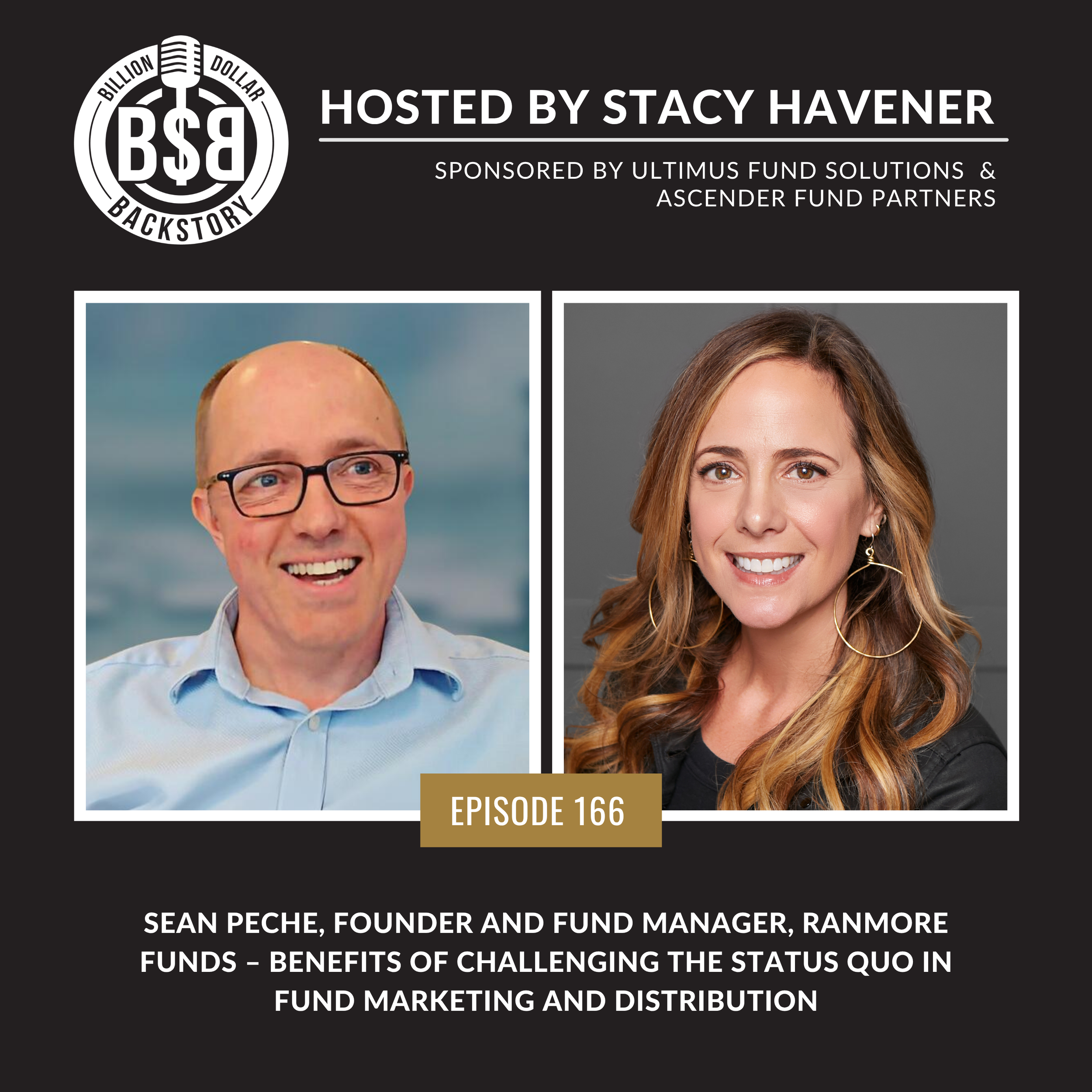
He's the Founder and Fund Manager at Ranmore Funds, a $650M investment boutique where "that's how it's always been done" isn't really a good enough reason to keep doing something.
And that applies to a lot more than how Sean invests. He's challenged a whole lot of the traditional playbook while building the business too.
So what does building a boutique differently actually look like?
In this Encore episode, Sean breaks it all down.
Listen in to hear:
Why he dedicates one day a week to distribution (and protects the other four for the portfolio)
The LinkedIn prospecting approach he leaned on before he had a marketing team
Why his approach to hiring looks very different from your typical asset manager
How "charitable marketing" lets Ranmore grow its network while doing some good along the way
The mindset shift that happens when you stop thinking like a fund manager and start thinking like a founder
Why honesty and humility might be a bigger competitive advantage than this industry gives them credit for
About Sean Peche:
Sean is the Founder of Ranmore Fund Management and portfolio manager of the Ranmore Global Equity Fund. Sean studied Business Science at the University of Cape Town, qualified as a Chartered Accountant and is a CFA Charterholder with 28 years of investment experience. He’s a committed Value investor who looks for the opportunity in every crisis. He lives in Surrey, England with his wife, Marilyn, their two children and two dogs. His guiding principles are “Do more than expected” and “Be kind”. He loves country music, wine, forests, and snowboarding.
TRANSCRIPT
Below is an AI-generated transcript and therefore it may contain errors.
[00:00:00] Stacy Havener: You know that moment at a concert when the lights go down, but the crowd won't stop clapping until the band comes back out for one more song? That's what this is. Welcome to Billion Dollar Backstory Encore episodes. An encore only happens because people liked what they heard the first time around, and they want more.
[00:00:21] So today, we're doing exactly that, bringing back one of our favorite conversations just for you. Sit back, grab your popcorn, and enjoy. Most fund managers are happiest behind their screens crunching data. It's their unique ability, so it makes total sense. But once a fund manager becomes a founder, investing isn't your only job.
[00:00:45] Marketing and distribution are critical to the success of your business. Today's guest, Shawn Pech, is the founder and fund manager at Ranmore Funds, a $650 million investment boutique that doesn't just [00:01:00] invest differently, they build their business differently as well. Shawn is a return guest to the podcast and a dear friend.
[00:01:08] Today, we dive deep on how Ranmore has challenged pretty much everything we think to be true about fund distribution, and in so doing, built a very successful business. If you are ready to embrace a new playbook for growth, you've come to the right podcast. Let's reunite with my friend, Shawn. Hey, my name is Stacy Havener.
[00:01:34] I'm obsessed with startups, stories, and sales. Storytelling has fueled my success as a female founder in the toughest boys' club, Wall Street. I've raised over 8 billion that has led to 30 billion in follow-on assets for investment boutiques. You could say against the odds. Yeah, understatement. I share stories of the people behind the portfolios while teaching you how to use [00:02:00] story to shape outcomes.
[00:02:02] It's real talk here. Money, authenticity, growth, setbacks, sales, and marketing are all topics we discuss. Think of this as the capital-raising class you wish you had in college, mixed with happy hour. Pull up a seat, grab your notebook, and get ready to be inspired and challenged while you learn. This is the Billion Dollar Backstory podcast.
[00:02:30] Sean, welcome back to the Billion Dollar Backstory Studio. This is the reunion tour.
[00:02:38] Sean Peche: Thank you, Stacy. It's lovely to be here. It's really is, so thank you for having me back.
[00:02:42] Stacy Havener: Happy to have you back. You were here, for people who aren't aware, you were here in season one, I believe. One of our most favorite, most downloaded episodes, and we're sort of coming back to deep dive on a topic that we wanna [00:03:00] pull forward from that episode and really unpack with you today.
[00:03:03] But before we do that We need the chapter update. So in episode one, you gave us sort of the backstory. It's been a couple years, the new chapter is underway. You gotta fill us in on how things are going.
[00:03:18] Sean Peche: Well, I'm pleased to say things are going very well. And so we-- I can't remember what the assets were, but it was probably about 150 or so thereabouts, and we're now at $630 million.
[00:03:30] So we've grown nicely, and- Oh, wow. Yeah. No, it's been great. And, and that's been in quite a tricky time for markets, but our performance has been great, you know, I'm pleased to say. Of course, you're always looking over your shoulder going, "Well, that was... You know, it's only about..." This is a race without end, so you can't relax.
[00:03:48] But our performance has been good in tricky times, and so even this year we're up.
[00:03:52] Stacy Havener: Yeah.
[00:03:52] Sean Peche: We're up in dollars. Wow. And so yeah, it's going well and we're having fun. That's the main thing. We're having fun.
[00:03:58] Stacy Havener: That's the big thing. Yeah. [00:04:00] So, and how about the team? I know we're gonna talk about team building, but has the team expanded or...
[00:04:05] So what's the team count now?
[00:04:07] Sean Peche: So the team, I think we're 10. Do you know, it's, I wanna manage money, not people.
[00:04:11] Stacy Havener: Yes.
[00:04:11] Sean Peche: Okay. So we do a couple of things differently. I mean, the one is we have no segregated accounts, and even if some big sovereign wealth fund came over the hill and said, "Here's $500 million, can you run a seg account?"
[00:04:22] The answer's no. Let's put the money in the fund with everybody else where my money is and my family's money, and all our clients in the same pot, and then we don't need a big back office. And then it reduces- Ah ... the fees for everybody else, you know. And I'm not spending time in fee negotiations with different segregated clients.
[00:04:40] I'm not placing 15 trades for the s- 15, you know, in the compliance associated with that, and the performance reconciliations and all the rest. So keep it simple, stupid. We know that's the formula. And, uh, and so that's what we do. And, and we're trying to manage our growth. I mean, I typically speak to clients [00:05:00] once a week.
[00:05:00] Yeah. So that the rest of the time I can focus on the portfolio because it's very easy to get dragged in lots of different directions by people who, you know, the, the guys on the distribution side. So Patrick on the distribution side, you know, he can set up meetings, no problem, uh, 24/7. But I don't wanna speak to clients 24/7.
[00:05:19] So it's Tuesdays, that's it. You know, one day a week.
[00:05:23] Stacy Havener: This right here, this part of the chapter update is actually something I want to put a pin in. I want people to hear this. Listen to what Sean just said. He has one day a week dedicated to distribution. Now, some fund managers might say, "I want as little days dedicated to distribution as possible."
[00:05:42] And that, I think, is a great segue into our topic because on the first episode we touched on this, sort of the building of a boutique, like the actual entrepreneurial parts of it. We also spent a lot of time on the [00:06:00] investment side. Today I wanna deep dive on that entrepreneurial piece. And distribution is key.
[00:06:07] I think a lot of fund managers, when they start their boutique, they think, "I'm talented. I'm gonna put up good numbers, and the rest of it's just gonna take care of itself."
[00:06:17] Sean Peche: You're absolutely right, and it doesn't happen like that. It really doesn't. So you do have to spend time, and I mean, one of the challenges as an entrepreneur is you gotta, well, when am I gonna do it?
[00:06:28] So before Patrick w- joined us, and when in my early days of trying to expand my network here in the UK, I would, um, when I was sitting on the train, I was going through on LinkedIn. I would... Here's a little trick. I would try and find a sales guy, okay, a distribution guy, who hadn't hidden his connections.
[00:06:48] Stacy Havener: So good.
[00:06:49] Sean Peche: And then I would go through there and I'd just send invites, okay? And I wouldn't... And, and what you gotta be careful about, you, you'll know this from LinkedIn, there's nothing worse than somebody who sends you a connection [00:07:00] request and then you say, "Okay, fine." You know, they're in a similar business, and then five seconds later- Ah
[00:07:03] "Would you like to buy this product?" Pitch it. Drives me mad.
[00:07:05] Stacy Havener: Pitch slap. We don't do that.
[00:07:07] Sean Peche: Yeah.
[00:07:08] Stacy Havener: So,
[00:07:09] Sean Peche: so that's what I would do, but I would use that time on the train. And I was just basically sowing the seeds so when you had a good period of performance, you had a, a bit of a, a, a bank of people who'd connected.
[00:07:20] I would go through posts, um, you know, if there was hashtag value investing or hashtag investing and see who liked somebody else's post, and then connection request them, people I thought were, was useful. When I was trying to get into some of the institutions, you know, what do you, what do you do? You think, "Okay, well great, I'm gonna go to the research, the fund research director."
[00:07:40] Um, go f- go find a junior analyst. So go find a junior analyst at that same firm, because that's an opportunity for them to get their name out there. So there were little things like that, trying to be a bit creative and thinking, "Well, how do I get round some of these obstacles?" And then on Sunday nights prepare an email, you know, short, punchy email that [00:08:00] people understand in, if they lose interest after the first paragraph, and time that to get sent, you know, during the week.
[00:08:07] But I was using Sunday nights when the markets were closed. So, you know, you, you kind of work with what you've got.
[00:08:12] Stacy Havener: This, we're gonna pause here, 'cause you just basically gave everybody, like, three or four fantastic ideas in a stream of consciousness. I want to pause and really give each of those its due.
[00:08:26] The first thing I really want people to hear, if you are building a business as a fund manager, you're a founder/fund manager, guess who does sales? You
[00:08:37] Sean Peche: Yeah
[00:08:38] Stacy Havener: Especially in the early days. That's why founder-led sales is a thing. It's why it's a thing in tech. It's why it's a thing in Silicon Valley.
[00:08:48] Founder-led sales is real for an entrepreneurial business. It doesn't matter what industry you're in. For some reason, in our industry, the founder fund managers are like, "That's not what I do."
[00:08:59] Sean Peche: Oh, yeah. [00:09:00] Right? No, you're right. No, no, you gotta do it. You gotta do it.
[00:09:01] Stacy Havener: You gotta do it. And let's think about it. If you're on the other side of the connection request, you're sitting there, you get a connection request from the guy, the founder of the firm.
[00:09:16] There's magic in that behaviorally. The same thing when you said reaching out to the junior analyst. Let's put ourself in that analyst's shoes. First of all, they're hearing from the guy, right? And you're very talented at what you do, so they have a chance, as you said, to go to their boss and say, "I have something interesting," and it makes them look good.
[00:09:38] Sean Peche: Yeah, that's right. Well, that was my thinking.
[00:09:40] Stacy Havener: Was.
[00:09:40] Sean Peche: I mean, I actually, I wasn't sure that it would come across like that. I mean, I remember the one, the one time the phone rang on a Friday, and it was shortly after COVID, and we were working from home, and Jo was working with me here in my study, but she was, I don't know, taking her children to a football match or something that day.
[00:09:57] So the phone rang and I answered it, and it was a Friday [00:10:00] afternoon. No, but, but it came across as like, hang on, is there anybody behind this guy? Is there... Do you see what I mean? And so that's- Yes ... always been at the back of my mind going, "Oh, well, hang on," and that's, you know, yes there is, but it's just that on Friday m- you know, we, I answered the call.
[00:10:15] Stacy Havener: So we have, we have a framework that we use in capital raising, and we call it the PM, portfolio manager, magic call. Okay? PM magic call, it's a thing here at Havner, and this is what it is. You ready? You can take this.
[00:10:32] Sean Peche: Okay. '
[00:10:32] Stacy Havener: Cause now you're at 650. It's even more magical. You literally pick up the phone, which everyone is like, "Phone?
[00:10:39] Who uses a phone?" Just stay with me. You pick up the phone and you just call someone. So we, our sales team would look at the funnel, and then we would go to our fund managers and we'd say, "Hey Sean, I have two magic calls I want you to make, this person and this person." And your job was to call them. No appointment scheduled, no assistance.[00:11:00]
[00:11:00] You just call, and if they, if you don't get them, which you're not, you leave a voicemail and you say it's, "Hey, it's Sean. You know, we met, loved our meeting, you know, was thinking of you." Like, we would give you the, the little things to tie it back to them, and you would leave the message. Again, put yourself in the shoes of the person receiving that They're like, "I just got a phone call from Sean Pechtch, the founder, fund manager at Ramar."
[00:11:26] Tell me who's getting that phone call from Larry Fink.
[00:11:30] Sean Peche: Yeah. Uh, okay. Yeah, I see. Yeah, yeah. I see what you mean.
[00:11:33] Stacy Havener: Right?
[00:11:33] Sean Peche: Yeah, yeah.
[00:11:35] Stacy Havener: So there's magic in it.
[00:11:36] Sean Peche: Yeah.
[00:11:37] Stacy Havener: Now, do you have to deal with the sort of who's behind you? Sure.
[00:11:40] Sean Peche: Yeah, yeah.
[00:11:40] Stacy Havener: But, but the magic, I hope you never lose that. I know you won't, 'cause I know you.
[00:11:45] Sean Peche: Well, sometimes, you know, if there's a query that comes through to client services and I see it and I just think, let me just... I'm going on a dog- 'Cause that goes to a whole lot of people in the firm, okay? But I'm about to head off on a dog walk, and I think I'll just phone the guy. Yeah. And sometimes they're quite surprised.
[00:11:59] But they [00:12:00] do... You know, I'll just, I'll just phone them and say, "Look, I'm out on a dog walk if you don't mind, but, you know, I saw your question and you wanted to discuss this," and there we go.
[00:12:06] Stacy Havener: It's so perfect. It's so perfect. Okay, so now LinkedIn, you also did a, an advanced level PhD degree LinkedInning on the connection piece.
[00:12:18] Brilliant. Go find the distribution people, look at their connections, and send some connection requests, but not pitch. That's like
[00:12:27] Sean Peche: Oh, no, that's right. But now what worries me is that every sales guy's gonna quickly go and hide all their connections, okay?
[00:12:32] Stacy Havener: No, they're not.
[00:12:33] Sean Peche: I'm talking about the, you know, looking into the connections and go, "Ooh, yeah, that's a good person."
[00:12:38] Stacy Havener: Yeah.
[00:12:38] Sean Peche: Uh,
[00:12:39] Stacy Havener: that
[00:12:39] Sean Peche: works. Yeah, that's
[00:12:39] Stacy Havener: a move. Yeah. That's a move. Yeah. That's totally a move. Let's be real. No one wakes up and says, "I can't wait to build some operational infrastructure today." You're here to manage money, to build something that lights you up, not chase down reports across five systems and 15 service providers.
[00:12:58] That's where Ultimus [00:13:00] Fund Solutions comes in. They're your ops dream team, consolidating all your middle and back office chaos into one clean, scalable setup. Registered funds, private funds, SMAs, all integrated. One team, one tech platform, one rock solid source of data. But here's the real differentiator; service.
[00:13:25] I know that fund in a box sounds convenient. It's also a box. Know what you can't put in a box? A human who picks up the phone when you call and need help. Real life people who know your name and your fund, and they care about getting it right. Ultimus was built on people doing business with people. You get institutional strength combined with boutique level service, without getting stuck in a phone tree of doom.
[00:13:53] If you're ready to simplify, scale, and start working with a team that feels like an extension of yours, [00:14:00] check out billiondollarbackstory.com/ultimus. That's U-L-T-I-M-U-S. You've got the investment strategy, the vision, the track record. Now it's time to upgrade the engine behind it all with Ultimus. Also, and, and we're gonna talk about this when we're together on Thursday, but one of the things that came up in a podcast I did this week was around how the quiet shadow fans who watch you but they don't engage Right?
[00:14:35] And one of the ways you can get into that is go look at your profile views.
[00:14:41] Sean Peche: Yeah, yeah, yeah. Okay? I've seen that, and I used to f- it was quite interesting because I'd often find that I'd get lots of likes, and I'd look at the people, and then I'd look at the profile views and I'd go, "Well, hang on, a whole lot of portfolio managers have, have looked at my stuff, and they keep looking at it, so they must like it," but they never like it because they don't wanna be seen to like [00:15:00] their competitors.
[00:15:00] Of course not. And, uh, it's the oddest thing. I don't know what it is. I know. I think it's pro- I don't know if it's professional jealousy or what it is, but it's ridiculous. You know? It's- It is ... it's a way of saying thank you. If you found it interesting- It sure is ... just say thank you. And it builds awareness.
[00:15:13] And
[00:15:13] Stacy Havener: it's not a zero-sum game. It's not a zero-sum game.
[00:15:17] Sean Peche: Exactly. It really isn't. And, and I mean, I just- It's not ... you know, it, I like to say, and I credit, um, a chap, Tas, Tas Du Toit, who, who I met way back when, and, and Tas used to say, "There's enough sunshine for all of us." That's right. And that's what I wanna say with, with us boutiques.
[00:15:34] We must help each other, and that's why I'm giving you some of these tips. I mean, I can't manage all the value money, and no one else can manage all the value money. So let's- No ... let's share the love And do something that the others aren't- Exactly ... and because there's enough sunshine for all of us. So
[00:15:49] Stacy Havener: also putting- Yeah
[00:15:50] a pin in the newsletter, I think an email newsletter is a great low pressure way to invite somebody to follow along. [00:16:00] Like sure they can follow you on LinkedIn. Yeah. That email newsletter's kind of a step closer to becoming a client, so that was brilliant too. Um, what else? What else do you see either typical managers do maybe, I don't wanna say wrong, but wrong, and, and how have you approached that differently, successfully?
[00:16:24] Sean Peche: Well, I think, you know, it's just be who you are. So I, I think a lot of people try and say, "Well, you know, what do the guys want us to say?" Yeah. They want us to say we have high conviction. They want us to say we've got low turnover. They want us to say we only find the best businesses, because it sounds great.
[00:16:39] I just say, "Look, we wanna buy decent businesses. They don't have to be the best businesses." They gotta make money and, but I wanna buy them at a great price. I wanna buy decent businesses at a fabulous price rather than a fabulous business at an expensive price. And so, you know, we've got high turnover.
[00:16:54] Yeah, I tell people we got high turnover. We're gonna make mistakes. I mean, we had a good month. We've had a couple of good months, so but, [00:17:00] but see one of, I mean, Feb, one, I think it was Feb or March, whatever, we had a, we had a... It was Feb. We had a great month and I wrote about a mistake because, um, you know, you gotta be, just keep yourself grounded here.
[00:17:12] You're not gonna get everything right. Yeah. So tell people we don't get it all right because even if you're great, you know, the top guys get 60% right, 40% wrong. But how often do you s- well, people don't spend 40% of the time talking about the stuff they got wrong. They spend no time talking about the stuff they got wrong.
[00:17:30] So you wanna set expectations, you know, for clients coming to you, 'cause they think you're gonna get everything right, they better go find somebody else, 'cause it's not gonna be us. And if you just set expectations- Right ... and it's honesty, then, you know, hopefully they believe everything else you say. So-
[00:17:43] Stacy Havener: It's a great point also because you sort of own a period of underperformance or a lag in performance before it happens, so that when it happens, because it will- Yeah
[00:17:57] they're not surprised. Yeah.
[00:17:58] Sean Peche: Well, I had an [00:18:00] interesting one th- recently where a guy said, um, "Well, how do I know you're not gonna get..." You know, we lost money in Russia, okay? We lost 10%, but we still ended 2022 up and outperformed the market by, I don't know, 20% or something. So we were up and the market was down 18, and that was including a loss in Russia.
[00:18:19] So people said, "Well, how do I know you're not gonna get another, you're not gonna have another situation where you lose 10% in a region?" I said, "You don't. But what you can see is we can recover." Yeah. Do you see what I mean? So you're setting the expectations, not like, "Oh, well, we made a mistake with Russia.
[00:18:34] We're never gonna buy another emerging market ever again." And you go, "Well, you know, the S&P's down 10% or whatever it is this year, so could have had 100% in S&P and you'd be no worse off than having a position in Russia."
[00:18:47] Stacy Havener: It's a reframing, and I think one of the things whenever I talk with you, and I love our conversations, you're so inspiring, one of the things that I really feel is it's [00:19:00] like rebel.
[00:19:00] It's like you don't really give a shit. I think some- we reach a point in our careers, especially if we're founders, where it's like, I just don't give a shit. I'm not gonna play by the old rules and the status quo if it's not what I believe, and some people aren't gonna like it, and that's fine.
[00:19:19] Sean Peche: And that's fine.
[00:19:20] I don't need to be liked by everybody, and so, you know, I'd rather... But what you want to have is you wanna have the right clients. That's what it means. And the challenge when... Yeah, the challenge early on is you'll take any client that comes, okay? You'll take a segregated account at low fees because you just need the, the money.
[00:19:37] You'll try and tell people what you want to hear. But I mean, it's like in a relationship. You know, if you're just yourself- Yep ... and you're honest, then you'll attract the right person. If you try and pretend that you're something that you're not, eventually it's gonna get found out.
[00:19:52] Stacy Havener: You
[00:19:52] Sean Peche: know? And then it's gonna be a problem.
[00:19:54] Stacy Havener: Yeah.
[00:19:54] Sean Peche: So, so rather just do that upfront. I think one of the things you have to do is with all [00:20:00] this LinkedIn is before you engage in all of that, you need to make sure the stuff that, that, you know, when they go looking for you, they go, "Okay, who's this guy who's sent me a connection request?" Then they need to...
[00:20:09] And they go to your website, the website needs to be up to speed.
[00:20:12] Stacy Havener: Oh.
[00:20:12] Sean Peche: If you've got your fund, you know, it's gotta be slick. You gotta have the latest fact sheet loaded on the website. I'm amazed at how many fund websites they've got, okay? And you go and you say, "Well, okay, what are these guys? Let me just have a look at the latest fact sheet.
[00:20:25] I've heard about them." And you go, "Ah, it's three months old." And you go, "Really? On your website? Come on, guys." Um, you know, make sure the information in Morningstar and on Trustnets and all these things is up to speed so that when people find you, they're looking at a slick product, you know? So I think it's very important.
[00:20:43] Stacy Havener: It's very important. And also these are easy wins.
[00:20:48] Sean Peche: Yeah.
[00:20:49] Stacy Havener: These are easy wins on the journey. This is like, you know, table stakes kind of stuff. These are silly reasons. And I think the reason this is becoming more important now than it [00:21:00] was back in the day- Is this next gen of analysts, so G2 analysts, whatever, they are like DIY due diligence.
[00:21:12] They're gonna wanna talk to you, but in the shadows of LinkedIn or in the interwebs, you know, they're going around and they're collecting due diligence research. They're doing their work. You don't know it's happening. And if you don't set them up to be able to do that-
[00:21:31] Sean Peche: Yeah. No, and, and you know what, Stacey?
[00:21:33] It's, it's like, didn't Steve Jobs used to do that? He would rip the phone. He, you know, he'd pretend he's a user, pretend he's a fund analyst, and now trying to find you, and searches for you on the web. Is he gonna find your fact sheet? Are they gonna find your fact sheet easily? Are they gonna find your website?
[00:21:49] You know, if they want to send you an email to client services or subscribe to your mailing list, is that an easy thing to do? Yeah. If they wanna invest, like is there a how to invest? You, you know, these are not [00:22:00] tricky things. Yeah. It's just kind of walking the walk that you would walk if you were an analyst, a fund analyst.
[00:22:06] So you wanna have those things lined up- Yep ... first, and then engagement. Now, that's an ongoing maintenance thing, and you, you know, every month. But, but it's a... And then you get this list, you know? There was an interesting podcast, and I can't even remember the name. It was a while ago. But these guys were mail shot marketing guys, and their, their whole focus was on that list.
[00:22:25] Yes. Our list, that is our gold. That is the thing we look at every day. We wake up thinking about this list. And so getting the LinkedIn people and connections and then saying, "Would you like to see our fact sheet?" Or whatever, getting them on the list. You, you f- you focus on that list. And I went from a, I mean, we had a mailing list, but I didn't know who looked at the mailing list.
[00:22:47] I didn't know. I hadn't paid any attention to it. When I listened to that podcast, I was like, "Right, this has gotta be a focus now." Yeah. And so spent a lot of time on this list, and we, it was running on Excel, and then we got a CRM system. [00:23:00] But a simple one, you know, I didn't need an all singing, all dancing Salesforce, and I found a fantastic system called FIRK CRM, and which was perfect for LinkedIn, actually.
[00:23:11] Stacy Havener: Oh, tell, why? Tell me more.
[00:23:12] Sean Peche: Well, it's got a LinkedIn add-in. So if I sp- I find you on LinkedIn and I go, "Oh, Stacey looks like a person I need to connect to," there's an add-in button and it adds to your data that's available publicly on LinkedIn onto the CRM. And it said, "Oh, Stacey," well, she's, you know, this is your title, this is your position, this is your company, et cetera.
[00:23:32] So all the standard stuff. And then what you can do is, is it can, it can enrich it. What that means is it'll go out into the web. So not everybody puts their contacts, uh, info on LinkedIn in terms of their, their company email address. Yeah. They'll put stacey@gmail.com or whatever, okay? And you don't wanna be doing that.
[00:23:53] But it'll go, "Oh, okay." It'll go out there in the web and it'll look and say, "Okay, the people at Haven New Capital, their-" [00:24:00] email formula is stacey.havener, Havener capital- Yeah ... or Stacey H or S Havener, whatever the formula is. And so it'll kind of enrich, it'll look out there to see if it can find an email address.
[00:24:12] So I thought it was quite useful, and obviously you, one's gotta be careful of GDPR and sending unsolicited emails and, you know, especially in places like Europe. But in the UK, if you think there's a good business case for, then you're allowed to contact people if there's a good business case, as long as there's an easily unsubscribe button and all of that.
[00:24:32] And so CRM helps you take care of that because if you unsubscribe to our email, I can't, I can't send you any emails again. So that's quite... Whereas if you're managing it off an Excel spreadsheet, you know, that doesn't work. So there's some ways to, to do it and, um, and it's been quite fun actually.
[00:24:50] Stacy Havener: It is
[00:24:51] Sean Peche: fun,
[00:24:51] Stacy Havener: isn't it?
[00:24:51] It's been
[00:24:51] Sean Peche: quite fun. Yeah.
[00:24:52] Stacy Havener: Well, I'm glad you enjoy it because again, this is part of building. It's not just sit behind your Bloomberg and, you [00:25:00] know, look at charts and refresh news and see what's happening in the macro environment. Like, it's not just that. You're, you're missing actually, you know, arguably the bigger part.
[00:25:10] You have to be good at what you do, but you also have to build a business. Yeah.
[00:25:15] Sean Peche: But in building the business and thinking about how you're building the business, that helps you analyze businesses.
[00:25:20] Stacy Havener: Doesn't it?
[00:25:20] Sean Peche: Yeah,
[00:25:21] Stacy Havener: definitely. I've heard that. I've heard that- Yeah ... from other, from other founder fund managers.
[00:25:24] Sean Peche: Definitely. Am I buying shares? I mean, you know, in Salesforce, no, because I've got, there's a great... There's, it's easy to start a CRM. There's lots of CRM packages. Yeah. And we- and you find that out when you look for CRM packages. Now, don't go tell Marc Benioff that, but you know what I mean. Well,
[00:25:39] Stacy Havener: because, because you're a user.
[00:25:40] Now you're a user.
[00:25:41] Sean Peche: Because I'm a user, yeah.
[00:25:41] Stacy Havener: So you can understand it. You also can understand, I would imagine- That you can understand a company from the founder perspective too, and sort of the ca- you know, CapEx and how, you know, comp and you have a different lens. Maybe the numbers are different, [00:26:00] but the lens I would think is sharper now that you have your own business.
[00:26:04] Sean Peche: Well, definitely because, and it makes me very wary of fast-growing companies because- Oh, yeah ... because management teams will be, it'll, you'll be tripping over yourselves, hiring people, firing people, all that sort of stuff. Do you know what? It's, uh, so I think it's slow and steady wins the race, and so we'll grow our business slowly.
[00:26:23] And if it means that we, we can by only speaking to people, with a few exceptions, you know, if a very big important client- Yeah ... says, "Listen, I can't see you on Tuesday. Can I speak to you on Wednesday?" That's fine. We'll make the odd exception. But it means that we grow slower 'cause we restricting time.
[00:26:39] Well, that's fine. We'll grow slower. You know, I'm going to Switzerland in a, in a few months' time, and the guys who helping us there wanted me to go for three week, a three-day road trip. I said, "Forget it. I'll go three week, three individual days, one a week. I'll fly in at night, we'll spend the day and I'll be back, so I only miss one day out of the office."
[00:26:59] But [00:27:00] anyway.
[00:27:00] Stacy Havener: That, but so, but this is it. Uh, and you know, this was a big learning for me actually on the CRM, to go back to that for a second.
[00:27:08] Sean Peche: Yeah.
[00:27:08] Stacy Havener: Because when we started adding in the advisory work and the consulting work, we wrongly assumed That people had CRMs-
[00:27:18] Sean Peche: Interesting ...
[00:27:19] Stacy Havener: and were not using Excel. And so what happened was very quickly when we'd say, okay, like, you know, we'd
[00:27:27] It kind of went back. It was like, okay, well what stage of your process is that prospect in? It was like, "Stage?" And we're like, "Okay, stage. Okay, well, like you have a CRM. What, what's the category?" "CRM." It's like, okay, keep going down, right? Where do you keep your information about your prospects? Excel.
[00:27:45] Sean Peche: Totally.
[00:27:46] I mean, when I say like it's, we've been using the CRM for less than a year.
[00:27:50] Stacy Havener: Yeah. So we said, "Timeout." We have to now take all our frameworks that we just didn't think were relevant on how to structure your [00:28:00] sales funnel, what the stages are, how to know what are the entrance and exit criterias of those stages.
[00:28:06] This is stuff that like, to us, we just thought, "Of course," but then we realized, okay, no, not of course. It's just because we're in it. So it's great that you're doing this. I think this is a critical thing. We're now taking all our, our clients through an audit of their CRM, their stages, because if you can have great meetings, but if you don't have a place to keep the information, you're not gonna remember it.
[00:28:32] I don't, I know you're all smart.
[00:28:34] Sean Peche: Totally. Absolutely right. And also then let's say we planning for Tuesdays in a few weeks time, you can go and say, "Well, which companies have we not spoken to?" You know, have they been looking, have they been reading our fact sheets? Did they, when we sent a link to the podcast, did they pay attention to that?
[00:28:50] No, they didn't. They haven't read the last five fact sheets. And okay, well let's not waste time with them. Let's go find somebody who's- Yeah ... read a few- Yeah ... fact sheets, who seems to be engaging with the [00:29:00] content we're sending them, because they're obviously hotter, and- Yes ... and we focus our attention there.
[00:29:04] So it actually means that the amount of time, you know, my one day a week is being efficiently spent.
[00:29:11] Stacy Havener: That's right.
[00:29:12] Sean Peche: You know, and that's, that's quite important.
[00:29:14] Stacy Havener: I think so. You want your data. I like sassy data, not-
[00:29:19] Sean Peche: Yeah ...
[00:29:19] Stacy Havener: not capital S, little A, little A, S. I like sassy, S-A-S-S-Y. I want my data to talk back to me.
[00:29:28] If my data doesn't tell me anything, what is, what's the point? So the data, like your CRM and your email list gives you intel back, and that's what you need.
[00:29:43] Sean Peche: Yeah. And so here's another little tip that I, and I, I mean, I tried it out, I think it works, okay?
[00:29:48] Stacy Havener: Okay.
[00:29:48] Sean Peche: When I sent an email to a couple of people at a company, I would always send it to two people.
[00:29:54] And here's my logic, and as I say, I don't know if it works. But if I just send it to you, and, and [00:30:00] you, you feel no obligation to reply. But if I sent it to you and your business partner, it-
[00:30:04] Stacy Havener: Oh,
[00:30:04] Sean Peche: on the
[00:30:05] Stacy Havener: same email.
[00:30:05] Sean Peche: Yeah. It's like, who's gonna reply?
[00:30:07] Stacy Havener: Oh.
[00:30:08] Sean Peche: Okay? Who's gonna reply? And, and if I've sent it to a junior and copied in the senior, it's like, um, well, hang on, the junior feels more beholden to reply and engage.
[00:30:18] And then-
[00:30:19] Stacy Havener: Fascinating
[00:30:19] Sean Peche: behavioral ... I don't know. Fascinating
[00:30:20] Stacy Havener: behavioral- Just a thought ... behavioral
[00:30:23] Sean Peche: twist there. So, so that's what I would do. I love
[00:30:24] Stacy Havener: that.
[00:30:24] Sean Peche: And I would get four people, you know, when I was building my lists, I'd say, "Okay, well, I want four people at each company," and I'd try two, and if that didn't work, then I'd try the other two.
[00:30:33] You
[00:30:33] Stacy Havener: save the other two, yeah.
[00:30:34] Sean Peche: Save the other two. That's smart. I keep them in the... So it was just, I mean, I just tried these things. You know, you gotta try and be creative about some of these things. And, um- But see,
[00:30:42] Stacy Havener: listeners are benefiting from your experiments.
[00:30:46] Sean Peche: Yeah. Well, you know. That's
[00:30:48] Stacy Havener: brilliant Okay. I wanna go to, you alluded to team a couple times.
[00:30:54] Sean Peche: Yeah.
[00:30:55] Stacy Havener: So let's do a little bit of the, we can't say wrong. What are we [00:31:00] gonna say? Old way, new way. The old way of team building and how to think about your team versus the new way or the Ranmore way. Like, talk about that because you've been very creative and different in how you found team members, not just in the number of them, but like the composition of the people.
[00:31:18] Sean Peche: Yeah. So I've, um ... Look, I'm very fortunate. My, my right-hand guy is a guy called Andrew, Andrew Lapping, and Andrew is a, an absolute superstar. I mean, he is the best investor I've ever worked with, and I've worked with some amazing people. And, um, so I'm extremely fortunate. He has amazing judgment, wise counsel.
[00:31:40] You know, I don't put out a LinkedIn post without passing it, you know, past him, and if he doesn't like it, I'll bin it. There's no, just leave our- Okay ... try and leave our ego at the door, even if I feel quite strongly about it, okay? So I think it really helps for founders to have a sounding board of a person who you really respect and [00:32:00] whose advice you're gonna take seriously, because we both want the same thing.
[00:32:03] I mean, we all want the same thing. You want your business to grow. And so, so I'm very lucky to have Andrew, and then I have, you know, we have a small team, so we don't get, uh, I wanna say, well, like, we're very disciplined about process, but we do our models and all our documents. I mean, in some organizations you have your fancy Word document, and the font's gotta be this size for the headings, and it's gotta be this, and it's like an MBA pitch book, okay?
[00:32:30] And we don't do that. We have our model, our Excel model, and then on another sheet we'll have our notes, and you can have as many sheets as you want. So you can have a quantitative sheet, which is our model, a financial model, and, and then a qualitative sheet. Uh, and then there might be some notes where you cut and paste from presentations, and you cut and paste from transcripts and from various bits of research you found around.
[00:32:54] So for us, that works. And when we discuss a company, we work through the model line item, and then we go, [00:33:00] "Oh, hang on, that margin looks a bit higher. That looks a bit aggressive. Why did their sales fall then? Oh, they sold the business. Okay." Versus, so it's a live thing as we're working through and going, "Okay, where's the valuation?
[00:33:10] What's your TRR? How are you getting that?" Whereas I think in some other organizations, the analysts spend a huge amount of time getting this document absolutely perfect so that it looks like you'd wanna frame it and hang it up at, at home. But actually- People are not gonna read it. It's like, what are the key things here?
[00:33:26] So we just go with what's efficient. And I think as a small business, you need to be efficient. You have
[00:33:31] Stacy Havener: to. Yes.
[00:33:33] Sean Peche: You know-
[00:33:33] Stacy Havener: Yes ...
[00:33:33] Sean Peche: you have to be efficient. So-
[00:33:34] Stacy Havener: And how, how have you found these people? I mean, I know you knew Andrew from, from prior, but like- Yeah ... as you're building, because that's a whole... I mean, managing people, to your earlier comment-
[00:33:44] Sean Peche: Yeah
[00:33:44] Stacy Havener: is perhaps the most difficult part about being an entrepreneur. Maybe about just being in business.
[00:33:50] Sean Peche: I th- well, especially in this industry. So we don't really hire people who have lots of experience elsewhere because we want to, you know, teach them our way. [00:34:00] And so I've kind of not gone out and, and marketed.
[00:34:03] People have sort of found us. Um, or I've come across them in life. And so, you know, Timbani, I think I've shared that story on LinkedIn, where he was engaging with me on LinkedIn. He wasn't asking me for a job. He was just liking my posts very early one Sunday morning. I thought, "This guy's keen." Yeah. You know, he's a student and he's liking my posts at 8 o'clock on a Sunday morning when the other students are nursing a hangover.
[00:34:27] Um, so you know, that's, that's Timbani. And Hiren I met in 2009. He was putting himself through university here, and I met him on the streets of London. And Josfat was my Uber driver, you know? And, and so I've always had this view that no matter who I meet, I'm sure there's something I'm gonna learn from them.
[00:34:45] Yeah. Even if it's a local Uber driver, and it's like, "What's your favorite restaurant?" Maybe he'll introduce me to an interesting restaurant. But Josfat was my Uber driver just before COVID, and we connected. I was born in Zimbabwe. He was born in Zimbabwe. We kind of connected, and then the COVID [00:35:00] happened.
[00:35:00] Yeah. And I thought, well, I was helping Josfat get a YouTube channel up and running, which wasn't working, and I thought, well, I can't let this... You know, what am I supposed to do? Poor Josfat can't drive as Uber, and he's got rented accommodation and, and rented, uh, a Uber, and he's got three children. I can't just...
[00:35:18] What am I supposed to do? I can't just drop him. So I thought, what can I teach him? So I taught him technical analysis. And I thought, well, I spend a lot of time looking through charts. I can show Josfat what kind of things I like to look for, and he can help me. And so he joins our meeting, and every day he gives us, if there are enough charts that are interesting, he gives us three charts he thinks are useful-
[00:35:39] Stacy Havener: That's
[00:35:39] Sean Peche: so great
[00:35:39] and interesting. And he's actually enrolled, we've enrolled him in the CMT this year.
[00:35:45] Stacy Havener: Oh, how wonderful. That's awesome. And does he like it?
[00:35:47] Sean Peche: Yeah, he likes it, and he helps, he, he also helps us with some AI stuff. So yeah. So our team is a bit different, and we kind of... But it's, they are, they have a couple of things in common.
[00:35:57] They're all smart, and they all have an amazing attitude, [00:36:00] and they're really nice people. And then they don't require a lot of management.
[00:36:03] Stacy Havener: That's, okay, two really important things I want people to hear. And I need to hear it. You hire for attitude and you train for the job. Yeah. Right? Yeah. Um, and this is something I really, like I struggle with this, full, full, being totally authentic and candid.
[00:36:24] I don't think people believe me when I say I'm an introvert because they see me, you know, out, and they see me on LinkedIn, and I, I seem very nice and extroverted, and I, I, I mean, I'm nice. I'm just quiet. In my day-to-day life, I am by myself a lot, and I like to think. I don't like to sit and swirl on ideas.
[00:36:46] And so I think what happens for me, on your point about they don't need a lot of management, is people come here and they think we're gonna be sitting around sort of like talking and doing and, you know, vibing, and I'm like in my office with my door closed [00:37:00] thinking most of the time.
[00:37:02] Sean Peche: Yeah.
[00:37:03] Stacy Havener: And I've had to learn that about myself, that I, somebody who needs a lot of time for me, that's like not my vibe.
[00:37:10] I'm very quiet and I'm very solitary, and I've had to learn as an entrepreneur that I need people who are okay with that.
[00:37:20] Sean Peche: Yeah. So most of us, and we've got an office here in Cobham, but some of us are spread all over the world and we speak regularly. We have our teams meeting every day at 10:00 o'clock, and that works for us because then-
[00:37:31] Stacy Havener: That's great
[00:37:31] Sean Peche: we're efficient and we're not all talking to each other in an open plan office. We actually can spend time thinking and-
[00:37:38] Stacy Havener: Yeah ...
[00:37:38] Sean Peche: looking for ideas and researching the ideas.
[00:37:41] Stacy Havener: It's, it's important for us to understand ourselves, I think- Yeah ... in the context of a, of a small team especially. Yeah. Because you have a style of interacting, communicating, managing, and you have to make sure that the people around you are gonna thrive in that environment.
[00:37:58] Sean Peche: I think that's right. [00:38:00] I think that's right.
[00:38:02] Stacy Havener: I wanna come back to marketing. What else have you done, and maybe it's even more recently, 'cause I know LinkedIn was a huge part of your distribution strategy, and still is. But have you added anything? Are you doing anything else to build your audience and build your platform?
[00:38:17] Sean Peche: Yeah. So what we, um, and this I thank Patrick for this, so, so he's head of UK distribution, and he introduced us to a PR agency. And I was always a little bit skeptical thinking, "Well, I don't know about PR. We, we certainly haven't got money for that." But anyway, y- y- we found a small PR agency, and so we said, "Listen, guys, we don't have a lot of money, but we can throw a little bit of the, the money at the problem.
[00:38:41] And if it works, well, then we can crank it up."
[00:38:44] Stacy Havener: Yeah.
[00:38:44] Sean Peche: And, and they've been amazing, you know, in terms of expanding the, the brand and, uh ... And what you can do is if you are on certain platforms, then they can focus their attention of trying to get you some exposure or for clients on that [00:39:00] platform. I mean, the other thing, obviously Citywire's been amazing and, uh, you know, me writing
[00:39:06] And so that's a bit of a commitment because you commit to, to writing, which is a slightly different style, but it gives a different audience. And then it means- Yeah ... what, and the advantage of some of those things, Stacy, as you'll know, is that when you meet the clients, they feel they've, they've watched your videos, they've listened to your podcast- Yeah
[00:39:23] they've read some of them, not all of them. Yeah. And, but it fast-tracks the process. So actually it fast- ... Yeah, that is the thing, it fast-tracks the process. And if you write an opinion piece and y- and you prepare to spend a little bit of time doing that, you, you know, you, the PR agency will find some way to get it, you know, printed.
[00:39:41] Stacy Havener: So that, that was gonna be my question. 'Cause PR Is typically a very expensive endeavor and something that a larger firm would, would step to, where boutiques are gonna say, as you did, like, "I don't have the budget for that." So is there a specific type of media that you're sort of tasking them with? Like, [00:40:00] are you saying, "I wanna be on podcasts," or, "I'm gonna write things and I want you to get it published," or like how, how are you thinking about the, the tasks that they do for you?
[00:40:09] Sean Peche: Yeah. So that's on the financial side. I mean, if anything, they ask us and it's like, "Look, I haven't got the time for this," you know. "Can they- can you write a piece for these guys?" "Well, I, I just haven't got the time at the moment 'cause it's one thing," et cetera, et cetera. So, um, but that's what we do. But they will listen to a podcast and then go, "Well, hang on."
[00:40:27] We'll take our fact sheet and go, "That's quite interesting. Can we pass that on to a few publications, see if anybody's interested in, and just lift that out of there?" So what it means is that if I'm writing content for the fact sheet or I'm writing content for Citywire, or I do a presentation and it's on BizNews and it's on YouTube, they will use that content efficiently because they'll take that little piece and say- Yeah
[00:40:50] "Okay, well, who's interested in this?" And the newspapers and publications are always looking for some commentary on content. And where they're also very good, and this is [00:41:00] Sam and Jonathan at Fortino, where they're really good is what's, what's everybody worrying about today? Oh, it's tariffs. Sean, have you got a comment on tariffs?
[00:41:07] Or Andrew, have you got a comment on tariffs? Okay, no, we don't have a comment on tariffs. Or, you know, or what- whatever, because that's maybe too macro or on the- Yeah ... dollar or the pound or, you know. But every now and again it's, "Yeah, we've got a comment on that."
[00:41:20] Stacy Havener: And then they make that comment, and are they going to t- is it like TV?
[00:41:25] Is it print? Is it... I don't even know. Well- I don't know what I don't know. Well,
[00:41:27] Sean Peche: we had... I've been on Bloomberg a couple of times. Okay. Sorry, CM- So it's kind of all of it. Sorry, sorry, CNBC. I've been on CNBC a couple of times.
[00:41:35] Stacy Havener: Uh- It's like multimedia.
[00:41:36] Sean Peche: Yeah, it's multimedia. Yeah, it's multimedia. That's
[00:41:39] Stacy Havener: great.
[00:41:40] Sean Peche: And-
[00:41:41] Stacy Havener: What a great suggestion.
[00:41:42] Sean Peche: Yeah. So I think my key point is find a small PR agency. Yeah. Now you're helping a small business, okay? You're giving the... And then as, as you grow, well, then they grow with you. And so rather than just go to a big company who's, they're, all they're interested in is their retainer, and then you hear from them [00:42:00] once a month, you know, just before they send you the invoice.
[00:42:03] You don't want that. So if you've got a small business that's keen, and there are lots of them, you know. These organizations shed staff and all the rest, and so some people go and set up their own little things. So- That's
[00:42:13] Stacy Havener: right ...
[00:42:13] Sean Peche: there, so there are ways in which you can do it. And I've been, my eyes have been opened to the benefits of PR, definitely.
[00:42:20] Stacy Havener: I think, again, it kind of goes back to our, where we started about the distribution, having a distribution strategy, which a lot of founder fund managers discount or just skip. Especially now, if you think that this is more of a reputation economy, this is real. Yeah. If you don't build an audience, you will not have a business.
[00:42:44] Sean Peche: Oh, that's absolutely right. I mean, it's no good having good numbers and nobody knowing about them. They have to know about them. And there's a lot of competition, because if you've got great numbers and there are other companies like us trying to get in the face of people, you're gonna get crowded out even if you've got better numbers than us.
[00:42:59] [00:43:00] So-
[00:43:00] Stacy Havener: And Gene, it's so true. If you look at the, at the gr- it, it doesn't matter. Look at the biggest firms, look at the fastest growing firms.
[00:43:06] Sean Peche: Yep.
[00:43:06] Stacy Havener: It's not the ones with the best numbers.
[00:43:09] Sean Peche: No, that's right.
[00:43:10] Stacy Havener: And so, and that's the, I think that's the myth e- especially in our business. So there's one other thing that you do that I wanna spend some time on.
[00:43:19] Sean Peche: Yeah.
[00:43:19] Stacy Havener: I don't even know what we would, what category this is. I guess it's marketing. You call it charitable marketing. Do you wanna explain? what that is. We talked about it a little on the first episode, but I wanna dive a little deeper on it.
[00:43:34] Sean Peche: Yeah. This has been quite ... You know, I, um, just before COVID, I took over as the treasurer at a field hockey club over here called Surbiton Hockey Club, and it was just before COVID.
[00:43:46] It was ... I mean, I felt like I got a bit of a hospital pass here because, you know, are you trying to save a hockey club, trying to save your business, trying to, you know, tricky, et cetera. But, but I found it very fulfilling. And again, it's [00:44:00] taught me about lots of different aspects of business and retail and because we put in an EPoS system, and it's taught me about, you know, merchant acquirers and, yeah, all those kinds of things.
[00:44:11] But more than that, you know, I, I've just enjoyed giving back a little bit to society. And, um, and so then, you know, with these, these little clubs, y- a couple of thousand pounds can make a difference, okay? One or 2,000 pounds makes a difference, and so because you could pay for coaches and whatever. So, so we sponsored the hockey club and
[00:44:32] But I like, um, the multiplier effect. So for example, you could ... We paid to put up a banner, but we bought a pizza oven, and then the hockey club could make pizzas, and then some children could learn how to make pizzas, and then the hockey club, it was like me sponsoring them all the time, okay? The only loser was the pizza shop down the road.
[00:44:52] Um, so I've kind of tried to roll that out. And now, now the, the interesting thing for me is value investing's about asymmetry. What's my downside? What's my upside? [00:45:00] Okay? So if I'm gonna go buy a pizza oven and it costs me 1,000 pounds, let's say You know, mine's my downside. M- the very worst, we're gonna get some nice pizzas out of this.
[00:45:10] But if it actually works well and people get to hear about it, maybe there's a wealthy guy at the club who says, "You know what? My- listen, Mr. and Mrs. Advisor, can you please take a look at this fund?" That was my kind of thinking. Yeah. Yeah. And I thought, well, my downside is limited, my upside could be amazing.
[00:45:24] Yeah. So it's the asymmetry. Okay? Now, um, I don't know whether that's worked out, probably not, but, uh, you know, I'm sure there are a couple of clients that we've picked up along the way. But, but then I kind of expanded that and said, well, so now what we've got is a project where we're collecting, um, shoes, football shoes and running shoes, and all the rest.
[00:45:46] We call it Runmore with Ranmore. And so we're collecting these shoes from football clubs and hockey clubs and schools here in the UK, and we're gonna put them in a container and send them out and distribute them to disadvantaged communities in Africa. [00:46:00] So our first trial shipments, and we're working with another charity that's done this before, and we've got a few thousand pairs of shoes, so we're gonna- but we're gonna send a, a pilot out there.
[00:46:09] And what's been quite interesting, which I've not really appreciated, is, is it's given me an opportunity to speak to some clients who, like, for example, in the logistics business. So there's a very wealthy client of mine who's in the logistics business in South Africa, and I was trying to work out, okay, how are we gonna get these shoes around?
[00:46:26] And so I contacted him. And so he was like, "Oh, that, that's great, Sean. It sounds amazing. I would definitely help. And, oh, by the way, I'm gonna send, uh... I saw your performance last time, I'm gonna send you some more money." So I hadn't even expected that, but it, but it- Yeah ... gives me a reason to engage with people who are philanthropic, you know, et cetera.
[00:46:45] Nice people, and we wanna manage money for nice people ideally. So we've kind of expanded that, and so now we've got- I mean, something that's quite close to my heart is homelessness, right? Because I remember somebody once saying that we're all, [00:47:00] and this is quite sobering actually, we're all three bad decisions away from being homeless.
[00:47:04] Stacy Havener: Whoa.
[00:47:05] Sean Peche: Three bad decisions from being homeless. Okay, you go and start a business, sink your life into it, something goes wrong in your relationship, boom. You know, lost your j- y- you're, you're homeless.
[00:47:15] Stacy Havener: Whoa.
[00:47:15] Sean Peche: It's quite sobering. And so we, we sponsor, um, the Haven Night Shelter. I've done that personally for, you know, 30 years or something.
[00:47:24] But, but we've now got 700 bed nights a month we sponsor in South Africa, and we've got some homeless shelters that we, we help over here. Um, so I guess there's two angles. So one, it helps keep me humble, and you realize just how lucky you are. Okay? Yes. And, and humility in this industry is important because the worst investors are the ones who think they know everything and will be arrogant and tell the world they know how it works.
[00:47:49] The, the second thing is it actually gives me an opportunity to rarely, if I'm speaking to people who are at Rotary or Round Table or whatever, I'm speaking to nice people, um, um, people who I'm speaking [00:48:00] to... You know, I mean, I had this one where I was speaking to the guys at the cricket club, and he was a retired partner from a law firm, a legal firm.
[00:48:06] And in fact, our club, we s- we sponsor a football club in Alexandria Township in South Africa, and that was, that was the funding was started by a guy called, um, Nick, who was a partner at KPMG in South Africa. He's a wonderful man. And so you actually, by doing these things, you're actually interacting with lovely people.
[00:48:25] So, you know, everyone's a winner. And you go, "What's my downside?" There's no downside.
[00:48:29] Stacy Havener: I, I love this on many levels, uh, but most of all on the human one because it's very easy in this industry especially to forget that there are people on the other end of these transactions. Real people- Yeah ... who actually do things in life outside of financial things and investment things and nine-to-five things.
[00:48:57] And so to me, what's... I mean, [00:49:00] the fact that you're giving back is, is obviously amazing, but I think it gives you a roundedness- To be able to interact with clients, prospects, just people as people that many fund managers can't do, have lost the ability to do if they ever had it, or are not interested in doing.
[00:49:26] And it's really sad that, that we've lost that.
[00:49:29] Sean Peche: It, it is. And look, I... It's, it's challenging as an entrepreneur. You've got your hands full, okay? Yes. You, you're trying to run the business and all the rest, now you're doing the stuff on the side. Um, but what do they say? If you wanna get something done, give it to a busy person.
[00:49:42] Stacy Havener: That's
[00:49:42] Sean Peche: right. Yeah. So, so I think there's some elements of truth in that. Um, but also now we've got to the size where we're saying, "Well, hang on. I have- I've gotta focus on running the money," which I've always had to do, but I need some help. And so we've got people who are running, you know, Stu's running with, uh, Run More with Ranmore.
[00:49:59] I've got [00:50:00] Bianca helping on the homeless side a- and some other aspects as well. So we've kind of, you know, added to... So Bianca helps me with the CRM, but she also does the charitable side. So, so you kind of th- so now you just come up with ideas and then you give the ball to somebody else and then they run with it.
[00:50:16] Yeah. And so actually I'm finding I'm spending less time on that stuff.
[00:50:21] Stacy Havener: And it gives them something to work on that's not just CRM
[00:50:26] Sean Peche: Yeah, exactly. Oh, absolutely. Absolutely. Right? Yeah. Yeah, you all wanna go home at, in the evening and know you've made a bit of a difference. And- Yeah ... um, and so we're having fun.
[00:50:36] And, you know, Stacy, and I think this is the thing, because if you're a boutique, I can go put my 1,000 pounds on, on Google and go, "Well, how many hits am I gonna get?" I mean, three? I don't know. And then they're probably gonna move on. But I can go and sponsor a local football club or a local cricket club or a local...
[00:50:53] And you know what? Maybe I meet a wealth manager there who puts me on, who hears, just gives me the time of day for [00:51:00] this, you know, and he, and then goes, "Well, hang on, let's introduce me to this person," or, "I can't help you, but so and so can." And it goes from there. And what's my downside? 1,000 pounds. And 1,000 pounds can make a difference.
[00:51:10] You could buy a coffee machine for 1,000 pounds or... So I'd encourage the others to do that, and we gotta think creatively.
[00:51:15] Stacy Havener: I think it's really great. And it also, you- you've made a friend. If nothing else, you've made a friend. You're, you're expanding your network and you have no idea. You can't map that forward.
[00:51:28] You can't map that forward.
[00:51:29] Sean Peche: Absolutely. And actually, I mean, at the hockey club I've worked with, um, Fred, our chairman, and Will, the CEO, I mean, they're unbelievably entrepreneurial. And so you learn from them.
[00:51:39] Stacy Havener: Yes.
[00:51:39] Sean Peche: You know, I've learned from them- Oh, gosh ... you know, in terms of negotiations and dealing with clients and other aspects of shareholders.
[00:51:46] So, so I've learned so, a huge amount from working with these people. So you're working with other nice people. Um, and it's also a nice escape. You know, every now and again, you- you're staring at the Bloomberg screen.
[00:51:57] Stacy Havener: I love that. It keeps you grounded. It adds [00:52:00] depth to who you are as a person.
[00:52:03] Sean Peche: Yeah.
[00:52:03] Stacy Havener: Um, all of it.
[00:52:04] So this has been fantastic. I wanna end. So the first episode-
[00:52:08] Sean Peche: Yeah ...
[00:52:09] Stacy Havener: we did, like, a version of Proust Questionnaire. Really it was more like James Lipton Actor's Studio. I'm not that fancy that I know Proust Questionnaire, let's be honest. But nevertheless, inspired by. So I had to come up with some new questions for the reunion tour But we're gonna start with a similar question as the last round, which is this, you can do book or podcast.
[00:52:33] What's a recent book or podcast that has inspired you?
[00:52:38] Sean Peche: So I've ... Oh, I'm gonna do both. Can I do both?
[00:52:40] Stacy Havener: Oh, yeah, you can.
[00:52:41] Sean Peche: All right. Yeah. So I tell you why, 'cause there's a story here. So I did a presentation recently for BizNews out in South Africa, and I was doing some work behind it, and I, I mean, Howard Marks is one of my gurus,
[00:52:53] Stacy Havener: okay?
[00:52:53] Yeah. Okay.
[00:52:54] Sean Peche: I, I love his stuff, and I can listen to him all day, and so anyway, I'm a [00:53:00] big fan of Howard Marks. And I thought, and I came across this book that I hadn't actually read of his called Mastering Cycles: Getting Your Odds On Your Side. Okay? Okay. And I thought, oh my goodness. So anyway, I u- bought the book, and I read the book.
[00:53:12] It's a fantastic book, and I used quite a few excerpts of that in my presentation, which I think I shared on LinkedIn. Well, what happened is the local, um, MD of Oaktree in the UK- No way ... he said, "Look, Sean, I've seen you mention Howard Marks on many ti- on many occasions, and he's actually gonna be over here in London in May.
[00:53:33] Would you like to join us for lunch?" I mean, so how amazing is that? So anyway, I have to mention that because I get an opportunity to meet, meet my- one of my main gurus here in London, so.
[00:53:44] Stacy Havener: That's amazing. Yeah, so
[00:53:46] Sean Peche: that's coming up, so.
[00:53:48] Stacy Havener: I love that.
[00:53:49] Sean Peche: I'll, I'll
[00:53:50] Stacy Havener: keep you- That's fantastic, and that's coming up in May?
[00:53:55] Okay. So you'll, you'll keep all of us on LinkedIn.
[00:53:57] Sean Peche: I'll keep you in the loop. And then in terms of [00:54:00] the podcast, there's Steven Clapham from Behind the Balance Sheet, and he did one recently- Yeah ... a little while ago by Anthony Bolton. He interviewed Anthony Bolton, who I'm, I'm a big fan of. And he is like the UK's Peter Lynch.
[00:54:13] Peter Lynch says he's, you know, one of the best investors in the world, and I think he compounded at 19.5% for 28 years. Phenomenal. And I did rush up to him. I spotted him in the crowd at the Value Investing Conference a couple of years ago, and I rushed up to him and said, "Listen, I'm a big fan. Thank you so much.
[00:54:30] I wish I had my book here." Um, I think he was a bit taken aback. But anyway.
[00:54:34] Stacy Havener: Okay. Wonderful. Great. And, and also just, again, some of the stuff, again, this idea that you can't map things forward. Like, you don't know where-
[00:54:44] Sean Peche: Yeah ...
[00:54:44] Stacy Havener: a LinkedIn post is gonna lead you. It's right.
[00:54:46] Sean Peche: Yep.
[00:54:47] Stacy Havener: Isn't
[00:54:48] Sean Peche: it
[00:54:48] Stacy Havener: so amazing? Yep. Okay, next up.
[00:54:51] This is about a word or phrase that you most overuse.
[00:54:57] Sean Peche: Well, that's interesting that you just [00:55:00] said. Interesting. I was listening to myself, I was listening to myself in a recent podcast, and I thought I said two things far too frequently. One is, this is in, uh, the interesting thing. So interesting is the word.
[00:55:14] And the other word is stuff. I say I was, you know? Right. So anyway, I need to try and work on those. I'm not sure how many times I've said stuff-
[00:55:23] Stacy Havener: I think
[00:55:23] Sean Peche: so.
[00:55:24] Stacy Havener: So actually I'm like cry laughing. I don't think you have to work on them. I just think it's interesting to know what the words are that people overuse- Yeah
[00:55:35] or use often. So what it says to me is you're intellectually curious, which is right. You are listening to a conversation and you find many things interesting. It's just a reflection of you.
[00:55:47] Sean Peche: Well, that's right. But I was listening to myself, and I mean, the family, I think they're like, "Sorry, why are you listening to yourself?"
[00:55:52] 'Cause I'm going, "Well, I wanna try and listen to how I can improve, how I come across or what I say." And that was my key [00:56:00] takeaway. You say the word interesting and stuff too frequently. So
[00:56:04] Stacy Havener: I'll try and stop saying those. That's great. I won't tell you mine 'cause it has a swear in it. Um, okay. All right. Now, next up.
[00:56:12] Your first job, not your first job professional job, your first job and a life lesson learned.
[00:56:22] Sean Peche: So when I was at university, I, I found a local restaurant, and it was called Farthings, and it was a fancy restaurant, and it was run by a, a lovely couple, Bea and Jeanie. And, and there I was at this, this restaurant.
[00:56:38] We used to serve, you know, it was like a special occasion restaurant. People would have engagements, not ... Well, anniversaries and birthdays and things like that. And Bea and Jeanie were just amazingly charismatic people. And so you would book, let's say, let's say you book a ... And then they would say, "So Stacy, you, you know, you wanna come on the 22nd?"
[00:56:58] "Great." "Is it a special occasion?" [00:57:00] "Yes, it's my anniversary." Yeah. "Okay." This is before, obviously, online. And so then you'd arrive, and they would go, "Stacy, it's so good to see you. Happy anniversary." Yeah. Da, da. You know, they joined the dots- Oh ... way before. And, and then it, it ... That was just, they were so warm and welcoming and engaging with whoever walked through the door.
[00:57:17] Um, and then it was taken over. They ... It was challenging running a restaurant as a family because you're busy at night, and you're waking up in the morning and finding produce for the market, and you've got young children. They had a young daughter. And so they sold it, and the person who took over- Oh, no
[00:57:32] had none of that. Oh, none of that. And was always, in fact, I remember he was charging VAT on our, on our tips, and I was studying accounting at the time. I said, "Listen, you can't do this. Listen, you can't deduct that on our tips." He goes, "Well, what do you know? You're at university." I was like, "Okay, I'll go and get a lecturer."
[00:57:49] And I went and got our tax lecturer's opinion, and, and I took it to him and said, "Look, you can't deduct this from our, our... And, and here's my tax lecturer's opinion. If you've got a problem with it, you know, please, uh, [00:58:00] please let us know." Oh, my God. But the difference was incredible. Well, what happened? The restaurant died with the guy who took over, completely died, and it became a pub.
[00:58:10] And so, yeah, so I think, I think just being- Yeah ... just service, warm, welcoming, things like that. Yeah. Learned that from B and Genie.
[00:58:20] Stacy Havener: That's a great story. I love that story. Thank you for sharing that with us, and I think it's a thread that's run throughout the entire podcast, to be honest, really, if you think back to what we've talked about.
[00:58:32] Sean Peche: Yeah. You know, it's- Yeah ... um, you can learn something from everybody, and, uh, and you never know what's in the other side of the story, you know? You never know what somebody else is going through- Yeah ... and all the rest. So I think, I think Tony Robbins- Yeah ... used to have the saying, you know, you always ask, what else could this mean, you know?
[00:58:48] If your partner comes in- Oh ... and they snap at you, you know, your inclination is to wanna snap back at them. But you go, "Well, hang on. What's behind that? What else could this mean?" And so you gotta [00:59:00] stop and ask. Ooh,
[00:59:00] Stacy Havener: this
[00:59:01] Sean Peche: is good. You gotta stop and ask, what else could this mean based on, you know, if a client's shouting at you, you don't know what's on the other side of that.
[00:59:07] Maybe it's not just your performance, there's something else going on, so don't take it too personally.
[00:59:11] Stacy Havener: Ah, that is fantastic advice. And in fact, my next question- Oh ... is about ad- it's about advice, which is, okay, so we did your first job. Given your experience now- What's something you'd tell your younger self?
[00:59:23] Sean Peche: Um, I should probably get my children in to answer this question. Um, I think, I think a couple of things. I mean, if, if we relate it to work, my one is make sure- Yeah ... that before you take-- I guess there's, there's two things. The first is a decision-making framework, okay? So if you can, if something is difficult to reverse, take a long time to think of before you act, okay?
[00:59:48] Ah. If, if you can reverse something quickly, well, then you can take less time. So, you know, if you, if you're going to, um, take a job, well, it's gonna be hard for you to get out of that 'cause you got committed, it's not gonna look good on your [01:00:00] CV, et cetera. Just be cautious and think about it before you do that.
[01:00:04] Um, whereas if the decision is easily reversible, you can spend less time. So that's, so that's the one. That's great. Um, but- Okay ... but also regarding if you apply that to our industry, I mean, there are lots of people who would like to leave and set up their own shop. That is a difficult decision to reverse.
[01:00:21] So the first thing I would say is make sure you've capitalized on all your goodwill at the organization before you leave,
[01:00:28] Stacy Havener: okay?
[01:00:28] Sean Peche: So is, is there anything they can do to keep you, to make you happy? Um, is there absolutely anything? And if you go to them and, and they say there's nothing, well, then that's fine because then you have no regret, and you wanna live life- Right
[01:00:40] without regrets, which is- That's a great point ... you know. So, so make sure you capitalize on all the goodwill wherever you are, okay? Do, uh, do more than is expected. I mean, that's my golden rule. If you do more than is expected in your friendships, your clients, your relationships, I mean, you know, with children, then that's, that's the [01:01:00] winner.
[01:01:00] So I just say to people, "Look, make sure you do more than is expected in all aspects of your life." So for me, I learnt those, and you just take you, take you longer to learn those than you wish you'd learnt them earlier.
[01:01:10] Stacy Havener: Well, that's the thing. You don't learn because it's an easy win. Yeah. You learn because it's a hard fall, and then you go, "Oh, you know what?
[01:01:21] I probably should have done that." Sean, you are such a gift. Thank you for coming back to the show. Thank you for all this fantastic advice about building a business. You are doing it. It is so awesome to see you, and I celebrate you and our friendship. I'm just very grateful.
[01:01:39] Sean Peche: Well, Stacy, it's very kind, and thank you for inviting me back.
[01:01:42] And, you know, I'm not doing it alone. I've got an amazing team who's doing it with me. But we're having fun, and, uh, look forward to seeing you when you're in London.
[01:01:48] Stacy Havener: Yes. We'll see you next week.
[01:01:50] Sean Peche: All right. Thanks Stacy. Bye now.
[01:01:52] Stacy Havener: This podcast is for informational purposes only and should not be relied upon as a basis for investment decisions.
[01:01:58] The information is not an [01:02:00] offer, solicitation, or recommendation of any of the funds, services, or products, or to adopt any investment strategy. Investment values may fluctuate, and past performance is not a guide to future performance. All opinions expressed by guests on the show are solely their own opinion and do not necessarily reflect those at their firm.
[01:02:18] Managers' appearance on the show does not constitute an endorsement by Stacy Havener or Havener Capital Partners

Resources