
Episode 142: From BlackRock to Boutique, Ellen Bockius of JLAM on Career Pivots, Boutique Building, and Overlooked Markets Big Funds Ignore
Subscribe to Billion Dollar Backstory on Apple Podcasts, Google Podcasts, Spotify, or wherever you listen to podcasts.
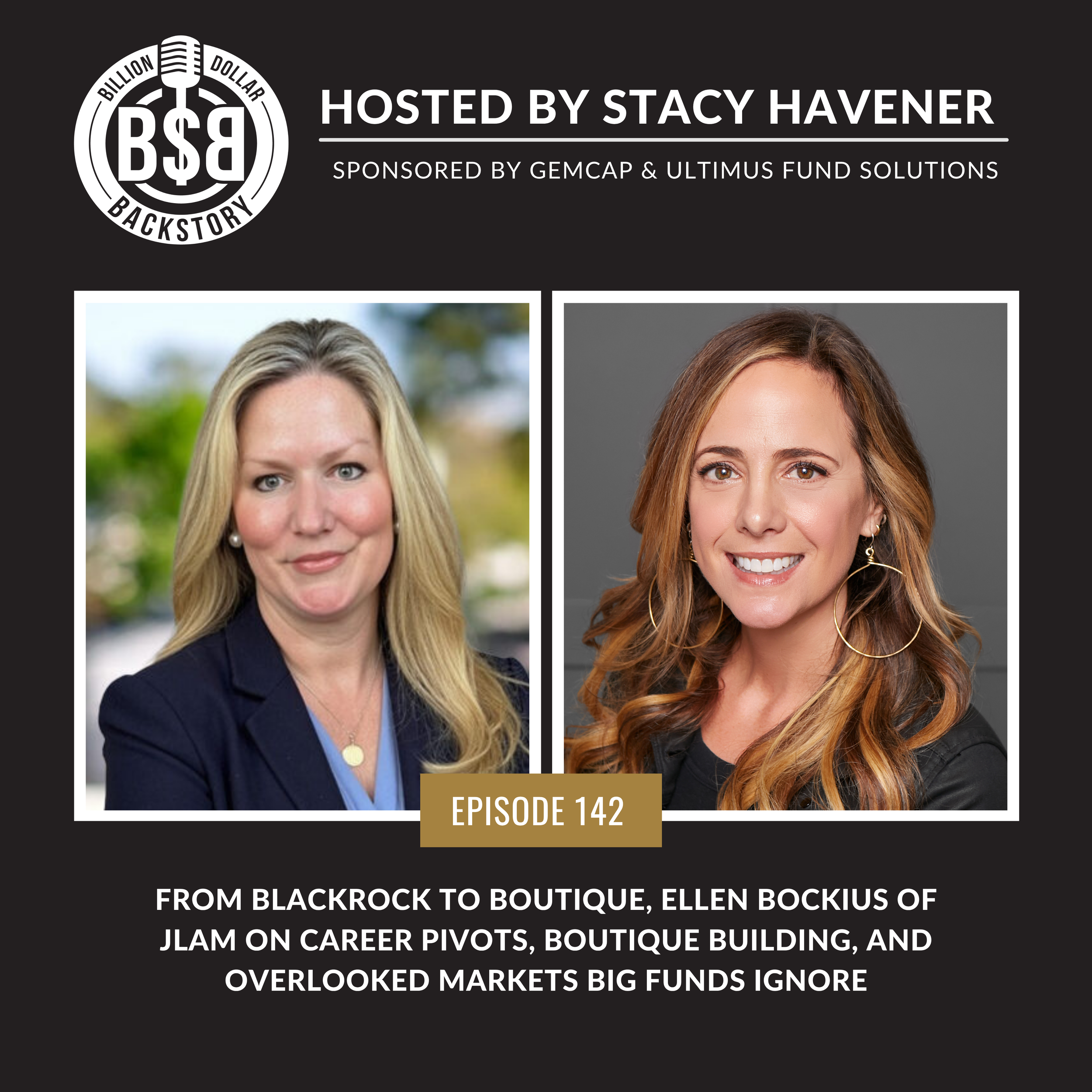
What do a Notre Dame finance degree, a brief detour into ninth-grade teaching, a Merrill Lynch internship, and 20 years at BlackRock have in common?
They’re all plot twists on the road to finding exactly where you belong.
In this episode, Stacy sits down with Ellen Bockius, Head of Business Development & Marketing at JLAM, a boutique real estate investment firm focused on the Mid-Atlantic coast, an area big institutional money often overlooks.
Ellen shares what it’s like to build a career by raising your hand and moving across businesses… and then suddenly have the “scaffolding” that held your career together at a big shop disappear. She doesn’t gloss over that chapter. She walks right into it.
Listen in to hear:
How Ellen went from “maybe I’m meant to be a teacher” to getting recruited into BlackRock (back when it wasn’t a household name)
What it was like to be a right-brained creative in a sea of left-brained people at BlackRock
What happens when the company that felt like your identity is suddenly no longer part of your story
Why moving from a big shop to a boutique is harder than people think
JLAM’s edge: operating experience + overlooked secondary/tertiary markets where big funds won’t even pick up the phone
This one is for anyone who’s ever wondered if the push they didn’t ask for might actually be the gift they needed.
More about Ellen Bockius:
Ellen Bockius is the Director of Business Development & Marketing at JLAM, where she leads investor relations, capital raising, and strategic partnerships. She previously spent 20+ years at BlackRock in senior marketing and client leadership roles, including Managing Director and Head of Institutional Client Marketing.
A native Delawarean and proud graduate of the University of Notre Dame, Ellen is also deeply committed to education and community service. She serves on the Catholic Diocese of Wilmington School Board and has been actively involved in various industry and philanthropic organizations. When she’s not helping shape the future of JLAM, she’s raising four incredible children with her husband, Troy, her most rewarding and fast-paced role yet.
TRANSCRIPT
Below is an AI-generated transcript and therefore it may contain errors.
[00:00:00] Stacy Havener: What do a Notre Dame finance degree, a brief detour into ninth grade teaching a Merrill Lynch internship and 20 years at the world's largest asset manager have in common. They're all plot twists on the road to finding exactly where you belong. Today's guest is Ellen BAAs, head of Business Development and Marketing at J-L-A-M-A boutique real estate investment firm focused on the Mid-Atlantic coast markets, an area that the big institutional money simply overlooks.
[00:00:36] Stacy Havener: Ellen spent two decades at BlackRock. Built her career by raising her hand, moving across businesses and leaning hard into what makes her different. This is a special episode for me because it's rare to see somebody move from one of the bigs, the biggest of the bigs to a boutique. But Ellen's story is really about [00:01:00] what happens when the scaffolding that held your career together at a very large shop is suddenly gone, and the company that felt like your identity.
[00:01:10] Stacy Havener: Is no longer part of your story. Ellen doesn't gloss over that chapter. She walks right into it and what she found on the other side, yes, there was grief, but there was also clarity. A childhood friend and a mediocre margarita at TGI Fridays with a blank sheet of paper that turned into. Something she truly loves this one is for anyone who has ever wondered if the push they didn't ask for might actually be the gift they needed.
[00:01:41] Stacy Havener: Meet my friend Ellen. Hey, my name is Stacey Er. I'm obsessed with startups, stories, and sales. Storytelling has fueled my success as a female founder in the Toughest Boys Club, wall Street. I've raised over 8 billion that has led to 30 billion in [00:02:00] follow-on assets for investment boutiques, you could say, against the odds.
[00:02:04] Stacy Havener: Yeah, understatement. I share stories of the people behind the portfolios while teaching you how to use story to shape outcomes. It's real talk here, money, authenticity, growth, setbacks, sales and marketing are all topics we discuss. Think of this as the capital raising class you wish you had in college mixed with happy hour.
[00:02:29] Stacy Havener: Pull up a seat, grab your notebook, and get ready to be inspired and challenged while you learn. This is the Billion dollar Backstory podcast.
[00:02:42] Stacy Havener: Wouldn't it be cool if you could diversify your investor base and add some non-US investors? Europe could be fun, or Latin America, maybe Antarctica. Hey, icebergs aren't really my jam, but you never know. You've only got one problem. How the heck do you do that? [00:03:00] Fair question. Maybe this is a who not how thing.
[00:03:05] Stacy Havener: Meet my friends at Gem Cap. Not only do they handle all the back office stuff, the how. They'll also solve the who in your distribution conundrum. They have an incredible network of distribution partners who can help you sell the thing. Once you've built the thing. And Gem Cap won't just help you launch globally.
[00:03:26] Stacy Havener: They'll tell you where to go, and maybe more importantly, where not to go. Saving you time, money, and annoying headaches. Want to find out if your investment firm is ready to go global? Visit billion dollar backstory.com/gem Cat, G-E-M-C-A-P. We've created a quick quiz that'll help you figure out if you're ready to expand beyond the US and side note.
[00:03:53] Stacy Havener: It's pretty fun too. Get your firm in front of the right investors in the right places with Gem [00:04:00] Cap. Take the quiz and get more info@billiondollarbackstory.com slash gem. Cap ge. M-M-C-A-P.
[00:04:14] Stacy Havener: Ellen, welcome to the Billion Dollar Backstory Studio. This is a joy for me because you are a client, a LinkedIn friend for years before becoming a client and now a guest on the podcast. Thank you for being here.
[00:04:32] Ellen Bockius: I'm glad you called me a friend and not a stalker, so, uh, that's good. But yes, I was, have been a fan for a very long time.
[00:04:39] Stacy Havener: Well, well now that we know each other, the feeling is mutual. Um, so this is gonna be a really. Different interesting conversation because everybody has a great story. Yours has some elements that we've not really, we haven't dived into this type of scenario [00:05:00] on the podcast before. I'm very, very excited about it and I'm not gonna be a spoiler.
[00:05:04] Stacy Havener: So before we get to kind of the career stuff, I wanna start even way back machine, which is. Did you always know you wanted to be in finance because people of a certain age, you know who are women especially like we don't have a lot of role models inspiring us on the finance journey. So I'm very interested in how you landed here.
[00:05:28] Ellen Bockius: Yeah. Uh, I mean, the simple answer is no. I did not have aspirations to be in finance. You know, I am the fourth of five children. I grew up, my dad was a dentist, my mom was a stay-at-home mom. Um, really great, you know, role models and examples, but definitely not in finance. Mm-hmm. Um, my two older brothers, however, went to the University of Notre Dame, which is where I ended up, and they were accounting majors.
[00:05:52] Stacy Havener: Okay.
[00:05:53] Ellen Bockius: Um, and I thought. Okay. You know what? I'm gonna go into the business school as well, but I'm definitely not, I knew myself well enough to know [00:06:00] that I was not meant to be an accounting major. It's just not, not something that gets me excited. So I thought, okay, well what's the next marketable thing?
[00:06:07] Ellen Bockius: Let's go with the finance major. Um, and I actually really enjoyed, you know, studying it. I enjoyed learning about it, but the thing that I always kind of. Got excited by was the, you know, the people element and the connections and the, the stories behind it. Um, but true to form, I actually graduated college and the job market wasn't great.
[00:06:28] Ellen Bockius: And I ended up teaching at a consortium for disabled children for a summer and was like, had this eureka moment, like I. I have missed my calling. I'm meant to be a teacher.
[00:06:42] Stacy Havener: Oh.
[00:06:43] Ellen Bockius: So I like, it just was such a really rewarding experience to watch these kids overcome incredible challenges. And so I was like, okay, new path.
[00:06:52] Ellen Bockius: I'm gonna go and I'm gonna, I'm gonna, I'm gonna be a teacher. My parents were really excited. Um, I, having gotten my degree from Notre Dame in finance, that [00:07:00] I was now gonna become a teacher, but I got a job at my high school, the high school that I corrected.
[00:07:04] Stacy Havener: No way.
[00:07:05] Ellen Bockius: Yeah, and I, I taught for a year and realized very quickly that it was not my calling.
[00:07:11] Ellen Bockius: Um, flat twist. I learned a ton. Yeah. Yeah. Flat twist. I learned a ton. You know, it informed a lot of, um, what I, a ton of respect for the profession. Um, a ton of like appreciation for parents and what they have to go through and support. Supporting their kids, but it was not for me. So I was like, okay, another redirection.
[00:07:32] Ellen Bockius: Mm-hmm. I'm gonna get a, I got an internship at Merrill Lynch for the summer and was reminded of what I really enjoyed about finance, and it was during that internship that I met the wholesaler from BlackRock. Um. Really dynamic, really smart, really engaging individual. He was a former Marine, um, and he showed an interest in me and took my resume to New York and said, you know, we should hire this girl.
[00:07:57] Ellen Bockius: And they did, thankfully. And, [00:08:00] um, I spent my, you know, about 20 plus years at BlackRock doing a variety of things. I started in the private wealth business, so calling on. Financial advisors, and this was back, this was in 2003 when BlackRock was not a household name. Yeah, it was, um,
[00:08:19] Stacy Havener: it's hard
[00:08:19] Ellen Bockius: to believe
[00:08:20] Stacy Havener: there was a time,
[00:08:20] Ellen Bockius: hard to believe.
[00:08:21] Ellen Bockius: Yeah. I know it's ubiquitous in the industry now, but it is only 14 years old and we had a lot of. Challenges and getting people to pick up the phone, but it was dialing for dollars and, um, really exciting. But then it was actually, I think at the beginning of BlackRock's growth stage where they started doing the acquisitions and really strategic moves to expand into the platform that they are today.
[00:08:44] Ellen Bockius: So the first one of those. That I was a part of was the Merrill Lynch Investment Management acquisition, and that was a, a group that knew a lot more about private wealth than we did at BlackRock. We were primarily an institutional shop at the time, and the kind of epicenter of [00:09:00] that business was in Princeton, New Jersey.
[00:09:02] Ellen Bockius: Mm. And I lived in Wilmington, Delaware, and I didn't move. I didn't wanna move, I didn't wanna to, to uproot my family. So I looked at the businesses that were in Wilmington, Delaware, and one of them was the cash management business. Hmm. And so I raised my hand and said, Hey, uh, wanna hire me? I'll, I'll do whatever.
[00:09:20] Ellen Bockius: I'll, I'll participate in a sales role or marketing role. And I moved into a seat where. It was kind of a bridge between the portfolio managers and the sales team. So kind of translating what was happening in the markets and moving that into more of like how we could communicate that out to clients. And my timing is impeccable because it was right at the beginning.
[00:09:43] Ellen Bockius: You know, this was a year before the financial crisis, and if you think about that, cash was at the epicenter of that crisis. And so that job that I thought was gonna be just this, you know, very easy like. Cash markets are, you know, the navs a dollar today. It's gonna be a dollar [00:10:00] tomorrow. Yeah. Um, I thought, you know, this is gonna be a, a really easy job.
[00:10:04] Ellen Bockius: It'd be, it became a very, very challenging one. But that kind of just led to a lot of different opportunities. I think. Um, as evidenced by my early years, I tend to like, have, I, I don't wanna say I get distracted, but I get enticed by different opportunities. Sure. So I moved my way around. The company.
[00:10:20] Ellen Bockius: Company. And I like to say that I got my master's in BlackRock administration. Oh, I
[00:10:24] Stacy Havener: love
[00:10:25] Ellen Bockius: an MBA outside. But I really learned how to work within the company. I learned a lot from really smart, really hardworking people, and built a career that kind of moved across the cash management business. I moved into the Aladdin business, which is the technology business.
[00:10:41] Ellen Bockius: Mm. And then I also ran marketing in for the institutional business, so a variety of opportunities and got to study and learn quite a bit.
[00:10:49] Stacy Havener: That is one of the advantages I think. I mean, it's interesting because one of the advantages of working at a boutique is you can wear a lot of hats. The problem is you wear 'em all at the [00:11:00] same time.
[00:11:01] Ellen Bockius: Yeah.
[00:11:01] Stacy Havener: But at BlackRock, very
[00:11:02] Ellen Bockius: true.
[00:11:03] Stacy Havener: But at BlackRock or at a larger shop, especially in the early part of your career, there's a lot of opportunities inside the company to go try things.
[00:11:13] Ellen Bockius: For sure.
[00:11:14] Stacy Havener: Natalie Wolfson, who's the CEO of Orion, was on the podcast recently, and she was saying very similar vibe to what you said, which was anytime there was something that looked interesting and they needed help, she's like, I just raised my hand.
[00:11:29] Ellen Bockius: Same.
[00:11:30] Stacy Havener: Yeah. And as it turns out, she said, that's one of the secrets to my success because I learned how to do marketing and then I learned how to do tech, and then I learned how to build out a platform and do the ops. Mm-hmm. And all the things so. I think it's great that you had the opportunity to try things.
[00:11:48] Stacy Havener: Um, but what happens next?
[00:11:50] Ellen Bockius: Hmm? What happens next? That's a good question. So, I left BlackRock, um, kind, not on my own will. Not out of my own will. Okay. It was, you know, the first [00:12:00] 20 years were exceptional. I had really great mentors, really great leaders that championed my career, that supported me. All of them went on to different careers outside of the company.
[00:12:10] Stacy Havener: Okay.
[00:12:11] Ellen Bockius: And as you move up in an organization like that, the scaffolding that is your support, the people that champion you, the people that care about you, really does play a significant role. Because, you know, it wasn't the 3000 person company that I joined. Um, it was now a 20,000 person company. Ah. So having those key leaders in place to help champion your career was important, you know?
[00:12:33] Ellen Bockius: My last role, I was running institutional marketing. The new leader came in and had a different vision for what the previous leader had, and I ended up being part of an exercise where I was shown the door asked to leave. And you know it, it is a pretty painful. Uh, chapter, if I look back on it, because this was a company and still is a company that I have tremendous respect for.
[00:12:57] Ellen Bockius: Mm-hmm. A company that I felt like I [00:13:00] played a significant role in helping to build. Yeah. Um, even being one of 20,000, like you feel that connection to the firm's mission, to the work that we were doing in the world. Yeah. And I felt very proud of that work. And so it was a disappointing end to a really beautiful career.
[00:13:16] Ellen Bockius: Yeah. But it actually gave me a really. Incredible gift. Uh, obviously if you're there for a long time, you get a, a nice severance to help you figure out what your next move is. And I had for the first time in forever, a summer off with my kids to reflect and to think about what I wanted next. And so. One of the first calls that I made was actually to my childhood friend, Doug Motley, who is the co-founder and managing principal of JLAM, and he invited me to an economic seminar at the University of Delaware, which I was like, I.
[00:13:53] Ellen Bockius: Yay. Like, I'm so excited to go to it.
[00:13:56] Stacy Havener: Yeah,
[00:13:57] Ellen Bockius: thanks. Like can we do something else? No, [00:14:00] I'm just kidding. It was a really great, it's a really great program that they put on. Um, and we went to A TGI Fridays afterwards. So again,
[00:14:06] Stacy Havener: very classy.
[00:14:07] Ellen Bockius: Thumb up.
[00:14:08] Stacy Havener: Very, yeah,
[00:14:08] Ellen Bockius: very classy.
[00:14:09] Stacy Havener: Nothing but the best.
[00:14:10] Ellen Bockius: Nothing but the best, uh, economic seminar and, you know, mediocre margarita at um, TGI Fridays.
[00:14:18] Ellen Bockius: And you know, like Doug has been a friend for many, many years. We went to preschool together, so I've known him a long time. I trust him implicitly. He has really great advice and really great connections. Yeah. And so I just kind of wanted talk.
[00:14:34] Ellen Bockius: You know, he's like, well, what are the things that you know you want? And I said, I want smaller. Um, which is not hard when you're leaving the world's largest asset manager. Yes. Um, it's
[00:14:43] Stacy Havener: all relative, isn't it, at that
[00:14:44] Ellen Bockius: point? Yeah. It's all relative.
[00:14:45] Stacy Havener: Yeah.
[00:14:46] Ellen Bockius: But I also wanted more local. I wanted to have a more direct impact because I was also managing teams wonderful and incredible teams, but I was further away from the actual work.
[00:14:56] Stacy Havener: Yeah.
[00:14:57] Ellen Bockius: And so I wanted to get closer to that. [00:15:00] So. Put a pin in that conversation. He and I stayed in touch and he called me again that August. And I had done even more thinking and I had had interviews with other companies, very similar jobs to what I had just left, and none of that felt right.
[00:15:13] Stacy Havener: Mm-hmm.
[00:15:13] Ellen Bockius: Um, so we met up again at another bar this time, our favorite bar
[00:15:18] Stacy Havener: Oh,
[00:15:18] Ellen Bockius: good.
[00:15:18] Ellen Bockius: And at the beach, the starboard. And he said, you know, I've, I've got a business proposition for you. What, what would you think about coming to work for me? Just was like, well, what would I do? What do you want me to do?
[00:15:34] Stacy Havener: Yeah.
[00:15:34] Ellen Bockius: And he is like, I don't know, but I, I trust you. I know you're smart. I know you're hardworking and I know that I wanna grow.
[00:15:42] Ellen Bockius: Yeah. And I think that you're the person that could help me do that. And so, you know, I think that the interesting part about this is I went home and I talked to my husband about it and I said, you know, the one thing that I worry about is the most important thing to me here is my friendship with death.
[00:15:57] Stacy Havener: Yeah.
[00:15:58] Ellen Bockius: I don't wanna ever risk [00:16:00] that. I don't want that to be in jeopardy in any way, but I really believe in what they've built. I think that their company is different and I think that I could help.
[00:16:10] Stacy Havener: Yeah.
[00:16:10] Ellen Bockius: Um, so we decided to do a trial run. I did, mm-hmm. Consulting work for him for three months just to make sure we weren't gonna damage anything.
[00:16:17] Ellen Bockius: And then made it official that following January and it's been. A really great 15 months since I joined. That's
[00:16:23] Stacy Havener: such a great story. And also one of my favorite sayings. People do business with people. What an example of that.
[00:16:30] Ellen Bockius: Yeah.
[00:16:31] Stacy Havener: I have so many questions. So let's, okay. First question. Going back to the fact that you were 20 years anywhere, first of all, in this day and age is really different and I wonder.
[00:16:48] Stacy Havener: And I'm gonna ask this in a way where I give you permission to share, not because it's you, but because there are people who are going through this, and I want you to speak to them. [00:17:00] Mm-hmm. I think one of the things that's true for all of us, I always say it for founders, but as I'm listening to you, I'm realizing this isn't just a founder thing.
[00:17:07] Stacy Havener: This is really a person thing. When you work somewhere for a long time and you, you put your heart into it the way that you, you have and did at BlackRock. It sort of becomes your identity. Like it's very difficult to extricate like who you are from what your job is because you've been there so long, like that was your story.
[00:17:34] Stacy Havener: And so I want you to like think about people who are going through that. Similar thing. And what advice do you have for them? Like how did you navigate that to like get to a place where you said it's okay, like I am not BlackRock.
[00:17:50] Ellen Bockius: Mm-hmm.
[00:17:50] Stacy Havener: And I'm Ellen and I'm gonna move on to something else. Like what advice do you have for people going through that?
[00:17:55] Stacy Havener: You know,
[00:17:56] Ellen Bockius: I think that the first piece of advice is, is okay to, [00:18:00] to take it personally. Um, even though those decisions are often and I had to sit on the other side of the table and make really hard business decisions. Yeah. And I know that in the end it was a business decision that they made, but because of the way that I operate.
[00:18:16] Ellen Bockius: It was very personal,
[00:18:17] Stacy Havener: of course.
[00:18:17] Ellen Bockius: Um, and because of how intertwined I felt with that story, I mean, I took on that BlackRock is a tremendous founder story. Yeah. I think, and Rob Capto started this business in a one room with a one computer and one phone and one couch. I mean, it's a really amazing founder story.
[00:18:36] Ellen Bockius: But when you're there for that long, you, it becomes your own.
[00:18:39] Stacy Havener: Yeah.
[00:18:39] Ellen Bockius: And I felt very connected to it and very proud of it, and I felt devastated when that piece of my identity was taken away. Yeah. But I also. No, that my identity is not there. It is in the four little humans that I'm raising here. It's in my husband, it's in my family, [00:19:00] it's in my friends.
[00:19:01] Ellen Bockius: I know that that doesn't define me, so, but I do think you have to give people permission to take it personally and to grieve that process.
[00:19:08] Stacy Havener: Yeah.
[00:19:09] Ellen Bockius: But. When you're given an opportunity to say like, I have a blank sheet of paper. Yeah.
[00:19:14] Stacy Havener: Design.
[00:19:14] Ellen Bockius: What can I do next?
[00:19:15] Stacy Havener: Design. Yeah.
[00:19:16] Ellen Bockius: And do I want the same?
[00:19:18] Stacy Havener: Right.
[00:19:18] Ellen Bockius: Do I wanna continue on this same path because I, you know, I could have gone to just a different logo
[00:19:23] Stacy Havener: Sure.
[00:19:24] Ellen Bockius: And done the same thing. But would I have been happy?
[00:19:27] Stacy Havener: Right.
[00:19:27] Ellen Bockius: And if I'm honest with myself, Stacy, that last year I really wasn't, I really wasn't enjoying my work. And so, and I never ever, ever would've left on my own. I sometimes I think we need that push.
[00:19:40] Stacy Havener: Oh, such a
[00:19:40] Ellen Bockius: good point to make the next leap and to, to move into kind of what's new and what's possible.
[00:19:46] Stacy Havener: Yeah. The next chapter, I have chills because it really, when you're in it, you know, we talk about the messy middle in a story and. It's so relatable. It's also very easy to gloss over. [00:20:00] Yeah. Right. Yeah. But the thing is, when you sort of, you're in it and it's real, and there are a lot of other people who've experienced this or are experiencing it now and feel like they can't talk about it, feel like they shouldn't take it personal, feel like all the shoulds that go with that, and also maybe didn't give themselves permission to see it as a gift because it's, it can be easy to see it as the opposite of that.
[00:20:27] Ellen Bockius: Totally. Totally. And I think, um, yeah, so I mean to having that permission, you know, to grieve the process, but then also like, look at the possibility. Yeah. And I think, you know, for me, having that like opportunity to spend a summer with my kids, to really, really dig into what it is that I wanted out of work, out of life, out of mm-hmm.
[00:20:47] Ellen Bockius: You know, and to, to find that joy again I think was, was really,
[00:20:50] Stacy Havener: yeah. That's amazing. Okay, so now my second question on this part of the combo is. You are challenging a bias I [00:21:00] have in a very great way because my bias is that it is very difficult to take someone who worked in a big shop. Bring them to a boutique and have that be successful for either party, not great for the employee, typically not great for the boutique typically.
[00:21:20] Stacy Havener: So you are challenging this because you're great and you're great at JLA, M and J a's great for you. And so. Why do you think that is? Because my experience is a lot of times when you're at a big firm, it's easy to hide. You don't have to have, this is me bias talking. You don't have to have as much accountability.
[00:21:40] Stacy Havener: You don't have to get into the weeds and do all the jobs. 'cause everybody has a siloed role. Yeah. And it's like it can turn into like paper pushing and. KPIs and a bunch of like big company speak, which is very, it's almost the antithesis of a boutique. [00:22:00] Yeah. And so how have you navigated that? How'd you do that?
[00:22:04] Ellen Bockius: Well, I mean, I do think I'm really lucky that I work for and with really incredible people in Doug and Nick and mm-hmm. The entire JAM team. Um, but it has been an adjustment because I'm used to running big teams and Yeah, setting the strategy and saying, okay, I've got great ideas. Let's do this. And then the team doesn't execute.
[00:22:23] Ellen Bockius: And so now I'm like, I've got a great idea and let's do this. And Doug's like, yeah, go. And I'm like. Oh, that's right. That's me. I gotta go through that. Um, but at the same time, it's like there's so much more flexibility at a boutique to leverage new technologies, to try things, to not to experiment, worry as much about what are the different groups gonna think about this.
[00:22:45] Ellen Bockius: And I don't need to go through eight different stakeholders to get approval. I need to like, you know. Doug hired me for my ability to make decisions and to push boundaries and to, to do things that are out of the box. And he trusts me. [00:23:00] And I think that that's the, that's the key, um, for making that transition to somebody who has been at a firm for 20 years and coming into a boutique.
[00:23:09] Ellen Bockius: I think the other thing is, like, I always felt a little different at BlackRock.
[00:23:13] Stacy Havener: Hmm. Um.
[00:23:15] Ellen Bockius: I don't know if you have ever done an HBDI survey. Mm-hmm. The Herman Herman Brain Dominance Survey. I what it stands for. Exactly.
[00:23:23] Stacy Havener: I love these types of things though,
[00:23:25] Ellen Bockius: but it's basically like what it, it add, it's a series of questions that analyzes the way that your brain thinks and it classifies your brain into like left brain, right brain.
[00:23:34] Ellen Bockius: And it's like. Has four quadrants of different colors.
[00:23:38] Stacy Havener: Okay?
[00:23:39] Ellen Bockius: Blue greens are like the analytical organization, um, very like methodical thinkers.
[00:23:46] Stacy Havener: Okay?
[00:23:46] Ellen Bockius: And yellows are the creatives. Red are the relationship,
[00:23:50] Stacy Havener: ah,
[00:23:50] Ellen Bockius: people.
[00:23:51] Stacy Havener: Okay?
[00:23:51] Ellen Bockius: So where, how you answer those questions determines how your brain works. And then it tests where your brain goes when, um, it's tested or challenged.
[00:23:59] Stacy Havener: Oh,
[00:23:59] Ellen Bockius: [00:24:00] so I'll give you one guess. I'm not a blue-green. Um, and at BlackRock. I was in a sea of blue greens and I was a red yellow in a sea of blue greens. And when I get stressed or when I'm, I'm anxious, I go deep red. And red is like the relationship side of things. So like, and it doesn't mean that I get emotional, it means that.
[00:24:22] Ellen Bockius: Okay, we're in crisis. I've gotta lean on my people. And I think that that's actually what made me successful at BlackRock was because I built out a really, really strong network of people. And I may not have had all the answers, but I knew exactly who I could call ah, to get the answers that I needed to solve the problem that I needed to solve.
[00:24:38] Ellen Bockius: But I always felt a little bit weird 'cause all of these people and. It talks a lot about how you need to communicate with people. So if I lead in, in a discussion with leadership about a problem and I lead with the human element of it, mm-hmm. Or I lead with the creative side of it, the blue greens are shutting down.
[00:24:58] Ellen Bockius: 'cause they want the numbers, they want the facts, they want the [00:25:00] details. So you have to kind of reframe the way Oh, very interesting way you communicate. Mm-hmm. And talk in that manner so that they receive the information and then you can add in the human element of it. Hmm. Because to me that was always gonna be the most important piece, but I had to learn to kind of communicate in that way.
[00:25:15] Ellen Bockius: Interesting. So that my stories landed and that, um, they connected to the human stories that I felt were more important.
[00:25:22] Stacy Havener: That was like a masterclass in whatever. What was that like? What was
[00:25:27] Ellen Bockius: It's HBDI.
[00:25:28] Stacy Havener: Oh, very fascinating. It's
[00:25:30] Ellen Bockius: very cool. It, it would be a cool thing to do with your team.
[00:25:32] Stacy Havener: It would be super cool.
[00:25:33] Stacy Havener: It's, you know, we, we do all like a bunch of, there's so many of these, but we do Colby. Yeah. And we do Working Genius. Um, we do some, we do a communication builder because one of the things you said there, I think is so important for teamwork, which is. How do I like to give information and how do I like to receive information?
[00:25:56] Ellen Bockius: Yes.
[00:25:56] Stacy Havener: And so one of the things that's very interesting, and you gave a [00:26:00] great example of like very analytical people have a way they like to receive information. One of the things that asks is like the mode. So the medium in which we wanna receive it. So is it email? Do you like text, do you wanna chat on Slack or whatever?
[00:26:15] Stacy Havener: Do you want a phone call? Do you want, and so, so mine, I'm curious what yours is because mine is face to face.
[00:26:22] Ellen Bockius: Mm-hmm.
[00:26:24] Stacy Havener: And we're virtual.
[00:26:26] Ellen Bockius: Mm-hmm.
[00:26:27] Stacy Havener: So everyone's like, ha. They're like, okay. But, but it's, so my second is phone. Which is also like totally uncool and unhip. 'cause no one wants to talk on the phone anymore.
[00:26:40] Stacy Havener: But for me, that's the next best thing. Yeah. I mean, I love a Zoom too, but like just talking on the phone with someone really works for me. But if we don't know this about each other
[00:26:51] Ellen Bockius: mm-hmm.
[00:26:52] Stacy Havener: If you send me super long email, I probably ain't gonna read it, write you back in my head and not respond to you because like, I just, [00:27:00] it's
[00:27:00] not
[00:27:00] Ellen Bockius: the way you
[00:27:00] communicate,
[00:27:00] Stacy Havener: it's not the way I communicate.
[00:27:02] Stacy Havener: And so. These little sort of, I think they're softer skills, but that communication style and how we what we need to be supported in a time of stress. Don't you feel like that's so important and overlooked?
[00:27:17] Ellen Bockius: So important. So important. I mean, there's other, you know, there's non-business ways to approach this too.
[00:27:23] Ellen Bockius: I don't know if you've ever read the book, the Five Love Languages?
[00:27:25] Stacy Havener: Oh yeah, totally. It's
[00:27:25] Ellen Bockius: totally, it's also how you show up with your partner and Yeah. Um, you know, my, my love language is gift giving. I love to give gifts to my friends to show up with something unexpected. My husband's is acts of service, so like if I give him a gift, he does not care.
[00:27:40] Ellen Bockius: He wants me to take out the trash and not ask him to do it. You know, like there, but like learning that about each other is true. Because you end up showing people the way that you receive it, and it's just really trying to, it's a study in human nature. It really, it's kind what makes people tick and what makes them happy, and how you can connect with people.
[00:27:58] Stacy Havener: Love it. [00:28:00] Masterclass and just interpersonal connection and, and I feel very strongly about this. AI is so great and everyone's like, everyone's geeking out and it is great for a lot of stuff, but I also feel like it is going to. Make the interpersonal and the face-to-face and the human piece so much more valuable.
[00:28:24] Stacy Havener: I mean, it already is everything for sure. Right? For sure. But like when you have all these tools and all this tech, the connections you have with people become even more rare, more special, more valuable, more opportunity to create something unique.
[00:28:41] Ellen Bockius: It's also just what makes the business fun, like,
[00:28:44] Stacy Havener: right.
[00:28:45] Ellen Bockius: It, it's all about people.
[00:28:46] Ellen Bockius: I mean, one of the things that I've learned, like coming into JLAM is, and one of the things that I was impressed by in the beginning when I started to talk to the LPs that have invested with Doug and Nick the beginning mm-hmm. Was just the amount of respect and like loyalty they [00:29:00] have to them. Yeah. And it's because they built this company with, um.
[00:29:04] Ellen Bockius: Just look, we're gonna do the right thing all the time. You know, not really like rocket science ideas, but we're gonna communicate really clearly. We're gonna, you know, do what we say we're going to do. We're gonna deliver on time. We're gonna deliver really great outcomes, and we're gonna operate with integrity.
[00:29:19] Ellen Bockius: And they, yeah. And it's not just buzzwords or marketing talk, it's actually how they show up.
[00:29:24] Stacy Havener: I
[00:29:25] Ellen Bockius: love that. And, um, I think that that's, you know, it's, it's a differentiator that I think you're absolutely right. AI levels, the playing field on a lot of things. Anybody can produce content that is, um, you know, and pushed out and
[00:29:37] Stacy Havener: Yeah.
[00:29:38] Ellen Bockius: Thrown up all over. Yeah. But it's what is actually authentic? What is really true to you? Where do you show up and where does the person come through?
[00:29:44] Stacy Havener: Yeah. I think it's really important. I think that's right. I think that's right. Let's be real. No one wakes up and says, I can't wait to build some operational infrastructure today you are here to manage money to build something that lights you up, not chase down reports [00:30:00] across five systems and 15 service providers.
[00:30:03] Stacy Havener: That's where Ultimas Fund Solutions comes in there. Your ops dream team, consolidating all your middle and back office chaos into one clean, scalable setup. Registered funds, private funds, SMAs, all integrated, one team, one tech platform, one rock solid source of data. But here's the real differentiator service.
[00:30:30] Stacy Havener: I know that fund in a box sounds convenient. It's also a box. Know what? You can't put in a box? A human who picks up the phone when you call and need help. Real life people who know your name and your fund, and they care about getting it right. Ultimas was built on people doing business with people. You get institutional strength combined with boutique level service without getting stuck in a phone tree of doom.
[00:30:58] Stacy Havener: If you're ready to [00:31:00] simplify scale and start working with a team that feels like an extension of yours, check out billion dollar backstory.com/ultimas. That's ul. T-I-M-U-S. You've got the investment strategy, the vision, the track record. Now it's time to upgrade the engine behind it all with Ultimas.
[00:31:24] Stacy Havener: Let's talk about differentiators because it's one of the things that's very difficult. It's very difficult for any industry, any company to sort of get their arms around differentiators. But obviously, since I know we've done work together, and I know the differentiators, one of my favorite connection points between us as partners is the beach piece.
[00:31:48] Stacy Havener: So talk to me about this overlooked much. Right? Hey, Hey Ken. Hey. Barbie beach. Yeah. Um, let's talk about, because when you think about [00:32:00] beaches on the eastern seaboard
[00:32:03] Ellen Bockius: mm-hmm.
[00:32:04] Stacy Havener: You know, there's sort of like the go-to ones Cape Cod, maybe it's Montauk and the Hamptons, but you know, don't snooze on that Mid-Atlantic region.
[00:32:14] Stacy Havener: So talk about that.
[00:32:16] Ellen Bockius: Yeah, I mean, well I, you know, as a Delaware native, I think it's very easy for me to see why you would choose the Eastern shore and the Delaware coast. You know, I think that maybe your northeast bias out there showing that the Hamptons are are better. Yeah. But the Delaware beaches are just really.
[00:32:34] Ellen Bockius: Special to me. I met my husband there.
[00:32:36] Stacy Havener: Yeah.
[00:32:37] Ellen Bockius: Um, Doug and I actually had a shore house down at the beach when we were in college. So the, the beaches are just really special. There's, um, you know, great communities, great amenities, great. Across the board. I think that, and it's often, you know, just markets that are overlooked.
[00:32:54] Ellen Bockius: Yes. Um, by kind of that institutional investor that has made it [00:33:00] really, um, a unique opportunity for JLA over the last couple of years.
[00:33:03] Stacy Havener: I think that's great. And I, and my bias is totally showing because I, I, I don't think I vacation anywhere south, like Cape Cod's, probably like this part of the south. I want.
[00:33:15] Ellen Bockius: Well, we're fixing this soon. You're
[00:33:16] Stacy Havener: coming to visit for sure. We're fixing, I'm coming. I'm coming down to Rehoboth. Are we rehoboth? What are we, what are, what beach are we?
[00:33:24] Ellen Bockius: Rehoboth Where, where? Rehoboth or, or Dewey. It depends on what Dewey you're looking
[00:33:27] Stacy Havener: for. Dewey. Yes.
[00:33:28] Ellen Bockius: Rehoboth has like a very, um, chic restaurant scene.
[00:33:32] Stacy Havener: Ooh,
[00:33:32] Ellen Bockius: very family oriented. And then Dewey is a V one, a little bit more nightlife, uh
[00:33:37] Stacy Havener: oh,
[00:33:37] Ellen Bockius: lots of bars with great live music. Um, the starboard that I mentioned earlier is a, is a fave. So yeah, it's a great kind of set of beaches along the Delaware coast and even down into to Maryland as well.
[00:33:50] Stacy Havener: I think that I can't wait to, to visit.
[00:33:53] Stacy Havener: Um, we're obviously gonna have to do a beach walk and talk because
[00:33:56] Ellen Bockius: For sure.
[00:33:57] Stacy Havener: Yeah,
[00:33:57] Ellen Bockius: for sure. I can't wait.
[00:33:58] Stacy Havener: Um, [00:34:00] okay. And so what else, what else on the differentiator side, when you were thinking about where to go next and you could go to a. Not a BlackRock, like a similar BlackRock logo. Or you could go Yeah.
[00:34:10] Stacy Havener: Like what, what spoke to you?
[00:34:13] Ellen Bockius: So I think as I, you know, this is something that I think connects back to the work that you and your team do. Mm-hmm. Um, and you see this a lot. Like sometimes founders are so close to the story Yeah. That they don't see what's really cool about it.
[00:34:25] Stacy Havener: Yeah.
[00:34:26] Ellen Bockius: And it was really evident to me in the first couple of conversations with Doug and with Nick, is that this is an investment company.
[00:34:34] Ellen Bockius: That earned its stripes through actual development work. Hmm. So, you know, they started 15 years ago developing communities, you know, in Rehoboth Lewis, Delaware area, and they earned kind of their. Credibility in knowing and understanding how all of that development piece works. They've since expanded to private equity real estate and have offered financing to sell [00:35:00] projects that they've developed themselves.
[00:35:02] Stacy Havener: Mm-hmm.
[00:35:02] Ellen Bockius: And so to me that was a really key differentiator that these are operators who know. Like you can't get anything past them if you're totally, if you're a sponsor and you're trying to get, you're trying to get funding, you know, they know how to dig into the spreadsheets, into all of the projections.
[00:35:19] Ellen Bockius: They know how to ask the right questions, you know, but it's also not to, to do that in like a gotcha kind of way.
[00:35:25] Stacy Havener: Yeah.
[00:35:25] Ellen Bockius: It's to do that in a value added partner kind of way.
[00:35:28] Stacy Havener: Yeah.
[00:35:29] Ellen Bockius: So if we're helping these projects, you continue to operate through. A prep equity piece or through, you know, some mezzanine debt.
[00:35:39] Ellen Bockius: We're actually seeing the value in what these, these sponsors are creating and can dig in and, and worst case scenario, from a risk litigant perspective, step in and, and help
[00:35:50] Stacy Havener: and help.
[00:35:51] Ellen Bockius: And to me that's very different than an institutional investor investing in real estate from an ivory tower in New York.
[00:35:58] Stacy Havener: Oh yeah. [00:36:00]
[00:36:00] Ellen Bockius: So that's such a critical differentiator. That's
[00:36:02] Stacy Havener: such a critical differentiator. And the other thing that's interesting about being in a niche, being a specialist, whether that's in a geographic area or in an asset class, um, is that the overlooked piece? Mm-hmm. Is so interesting to me because. You know, so let's take, you know, the biggest real estate shops, you know, they are, they have so much capital to deploy.
[00:36:30] Ellen Bockius: Mm-hmm.
[00:36:31] Stacy Havener: And they have to deploy that capital quickly.
[00:36:35] Ellen Bockius: Yeah. Yeah.
[00:36:35] Stacy Havener: And they're gonna go to the big. Metro areas. Mm-hmm. And so you kind of have this, this herd mentality happening where everybody's sort of fighting for the same projects. And when you have that, what does. Because you have so much money chasing the same properties and the same, the same projects.
[00:36:57] Stacy Havener: Yeah, the same projects. And [00:37:00] then you take obviously, again, bias showing here, because I live in a beach community as well, but you, you go to, you know, a smaller community with something really special that requires a specialized set of expertise where the projects are gonna be smaller. Like the big shops, they don't even care.
[00:37:22] Ellen Bockius: It
[00:37:23] Stacy Havener: doesn't
[00:37:24] Ellen Bockius: make a dent. It doesn't make a dent in what they're, if you've got. Billions of dollars that you need to deploy. You're not picking a phone call for anything less than 25 million. Mm-hmm. Or 50 million even. So, you know, those, these projects that are quality projects that just need maybe five to 10 are left without very many options.
[00:37:44] Ellen Bockius: Yeah. And I think the cool thing is, and that's where our strategy. Leans in, um, we look for overlooked markets. We look for secondary and tertiary markets that have really great growth prospects, that have good job growth, that have good kind of fundamentals, but are not gonna be those [00:38:00] hot top 15 mls Yeah.
[00:38:02] Ellen Bockius: Areas, you know, and where, where we really excel is because of the experience that we've had on the development side. Our network is really deep in these communities, so we've got a really strong referral network. Of brokers and, um, you know, developers and lots of different, like industry connections, lawyers, et cetera, that, um, can introduce us to these projects that are looking for help.
[00:38:26] Ellen Bockius: And the, the ones that are not looking for the 50 million or a hundred million, they're looking for five and 10. You know, because there's not a lot of people coming to rescue, you can actually command some compelling rates in that space, which, you know, is good for our investors and, you know, good for the overall, uh, investment strategy
[00:38:44] Stacy Havener: and good for the community.
[00:38:45] Stacy Havener: You know, there's this piece, like I had a friend sch. Sing from, um, Citi Different on, and she's a muni bond investor. And when we were talking about it, it's just like, how often do we actually just stop and [00:39:00] think about all the things that are behind a, a thriving, amazing community? Mm-hmm. And you know, for her, she's like, muni bonds are financing the, you know, the schools and the hospitals and the parks and all this stuff.
[00:39:15] Stacy Havener: And for you guys you're building these beautiful communities and providing housing. And like Doug was, I was asking him about that one project that I was like, what is this and where's the beach and what is that? And, and he was saying, oh, it's, it combines like the amenities of a resort. But it's a rental community and they're like these cottages.
[00:39:35] Stacy Havener: I dunno, that just sounds fun to me as like it's fun. It's fine to own some big building, like as an investor in a re and you have some class, a amazing building, but like. The project that he was telling me about. I'm like, well, that just sounds fun. That just sounds fun to be a part of.
[00:39:52] Ellen Bockius: Yeah. The one you're talking about is Light Village, which is, um, a community that we're developing in Lewis, Delaware, but it's rental cottages and [00:40:00] it's, you know, it's, it's serving a segment of the, you know, of the market that.
[00:40:05] Ellen Bockius: Housing in beach towns, popular beach towns
[00:40:07] Stacy Havener: mm-hmm.
[00:40:08] Ellen Bockius: Um, is hard to come by. Yeah. And people are getting priced out of the market. This offer offers an opportunity also for individuals who maybe don't wanna own anymore. Yeah. Or they want a place to call home, but they don't wanna be in an apartment. Um, it's the same type of strategy that we took to.
[00:40:24] Ellen Bockius: For sale communities or we have amenities that are exciting and enticing, or like even in our apartment communities, we wanna have amenities that people are excited to, to enjoy. So it's really, we, we like to, to do things a little bit differently. We like to create communities that people wanna be in. And I think that looking around at JLAM communities, I think is pretty evident.
[00:40:48] Stacy Havener: Yeah, I, I think that that is special. And in some ways it is like an embedded differentiator. Isn't it? Yeah. 'cause it's just like, this is what we do. Like what we do is different in [00:41:00] its nature. And I also think there's something cool about, let's put our marketing hats on for a sec. There's something cool about the blended lines between hospitality and real estate.
[00:41:12] Stacy Havener: Because we, we all know what it's like to go to a resort. We all know what it's like to go to a hotel and just feel like that luxury and being taken care of. We don't often associate that with like, if we're renting an apartment. Right? And so the blended lines between hospitality and hotels and resorts and kind of this real estate approach you're taking, there's something really, really cool about that.
[00:41:37] Ellen Bockius: Yeah. Yeah. I mean, we want places to feel like home.
[00:41:40] Stacy Havener: Yeah.
[00:41:41] Ellen Bockius: And I think that that's the special touches. And a lot of times, you know, Nick has a way of talking about this and the way we approach our developments. It's like the little things that you don't notice, but you notice. Mm-hmm. Like the, the street signs.
[00:41:54] Ellen Bockius: Are they on brand, are they unique? The entry monuments, the landscaping, [00:42:00] you know, the, the branding for each of the communities. I, I get to work on those. Oh,
[00:42:03] Stacy Havener: how fun.
[00:42:04] Ellen Bockius: So fun. So fun. That sounds
[00:42:06] Stacy Havener: so fun.
[00:42:07] Ellen Bockius: It's so great. We're doing a community called pinevale and the branding on it is so cool. It's got a little fox with a key in its mouth.
[00:42:14] Ellen Bockius: Oh
[00:42:15] Stacy Havener: my. It's
[00:42:15] Ellen Bockius: cleverly curated living. Um, it's a community of tiny homes that have the same kind of amenities that you'd expect in the high end community, but it's. You know, affordable living. And so it's those little details that you can't, like, you, like if you drive around in different communities and you are like, I like this one, but why do I like this one more than the one across the street?
[00:42:37] Ellen Bockius: And it's those tiny details that you pay attention to, that we always pay attention to, that I think make the big difference.
[00:42:43] Stacy Havener: That's amazing. And it also, let's take that now to like the broader asset management industry, because these are things that boutiques can do. Right.
[00:42:54] Ellen Bockius: Sure.
[00:42:55] Stacy Havener: Because it's, what does it take?
[00:42:57] Stacy Havener: It requires thought, [00:43:00] creativity, time. It requires dollars, but it's not like you're doing some big huge, it's not like you're like doing a Super Bowl ad. Yeah. You're just doing the small things that make an impact. And I think that's one of my takeaways from this conversation and like a, a takeaway for other firms to think about, like what are those signature moments?
[00:43:22] Stacy Havener: Regardless of what strategy you don't like. Yes. It's awesome. Ellen and JA, they're in real estate, so they have opportunities to do this cool stuff, but like what are the signature moments if a prospect comes to your office? What's different? What's special about that?
[00:43:37] Ellen Bockius: Yeah.
[00:43:38] Stacy Havener: Or what do you do your gift giving self will love this.
[00:43:41] Stacy Havener: Like what do you do after a meeting? Is there something you could send them? Even if like, I'm a big handwritten thank you note person except for one, I'm gonna, like, I found these, I was packing to go to Jamaica and I found all of these thank you notes that I wrote and put in my bag to mail and then forgot.
[00:43:58] Stacy Havener: So don't do that. [00:44:00] Okay. Like if you do the hard part, it's the. Signature moments. Yeah, signature. Little things that you can do. How fun that you get to do that. What else jumps out to you? And then we'll move to some fast fire questions. They don't, not really fast fire, but whatever. Um,
[00:44:19] Ellen Bockius: I think the one thing is also, I joined BlackRock when it was 14 years old.
[00:44:24] Stacy Havener: Yep.
[00:44:25] Ellen Bockius: I joined JM when it was 14 years old.
[00:44:27] Stacy Havener: No way.
[00:44:28] Ellen Bockius: Yeah. And BlackRock was at this growth trajectory. Is at this growth trajectory. So I don't think we have aspirations. I know we don't have aspirations to be the next BlackRock, but. I do think that it's a really cool thing for me, um, in running business development and marketing to be part of that next layer of the story, and it's a real privilege to be able to carry the founder's story.
[00:44:55] Stacy Havener: Mm-hmm.
[00:44:55] Ellen Bockius: With me, I think that, you know, the founder's story. Is really, really [00:45:00] special for boutiques and I think that sometimes it can be really hard for someone to step in and own that narrative. Yeah. But I think that one of the things that I'm also learning through your team and you know, with Doug's help is that it's now mine
[00:45:12] Stacy Havener: That's
[00:45:13] Ellen Bockius: right.
[00:45:13] Ellen Bockius: To carry forward. And I love it so much. I really, you know, I talk about how much I love BlackRock. I really, really love JLAM. I really love the care that we take of our partners, the, the way that our. Operators in the field treat our contractors. Oh. I love the way that the team shows up for each other. And you know, for me it was just, it really truly feels like home, you know?
[00:45:37] Ellen Bockius: So it's not just in the communities that we build, it's the company that Doug and Nick have built as well.
[00:45:43] Stacy Havener: That's such a positive and uplifting message. And also I think, kind of going full circle here for you on your journey, I would imagine that that's a great feeling. It's, it's a great feeling. I'm sure after 20 years at a place that got very, very big and probably [00:46:00] my words, not yours, but probably somewhat political and you know, you're climbing a ladder now and it's very corporate and stakeholders and all this stuff you talked about at the beginning.
[00:46:11] Stacy Havener: Like, do you feel sort of a, it's fresh and it must feel fresh. Yeah. It's,
[00:46:18] Ellen Bockius: it's refreshing. It's invigorating. Yeah. Um, you know, j a's been operating quietly with excellence under the radar for 15 years, and I now I get the opportunity to tell more people about it. It, and I'm excited about that. It,
[00:46:30] Stacy Havener: well, here we are and we're doing that.
[00:46:32] Stacy Havener: Um, couple questions about you going back to your journey, if it's okay to ask you. Yeah. Okay. First one does not have to be a business book, by the way. Can be any book. What book inspires you?
[00:46:45] Ellen Bockius: So I read one recently that really just kind of struck a chord and I don't know, it's not a business book.
[00:46:54] Stacy Havener: Mm-hmm.
[00:46:54] Ellen Bockius: Um, it was Midnight Library by, oh gosh, new Hague. I mean,
[00:46:58] Stacy Havener: give the listeners a little snippet of [00:47:00] what it is.
[00:47:01] Ellen Bockius: So it's basically about a woman who, um, you know, decides that her life as she's living it is not the life that she's meant to be living. And she's kind of done.
[00:47:10] Stacy Havener: Mm-hmm.
[00:47:10] Ellen Bockius: And so in this trans, you know, she has a death experience.
[00:47:14] Ellen Bockius: And in this, this transition, she goes to this. Room, which is a library and it's, it within the walls of the library are every possible book that could have been written based on any possible decision that she could have made throughout her life. So she has this opportunity to explore what it would've been mm-hmm.
[00:47:31] Ellen Bockius: If she had made different decisions. So yeah, in one life she's an Olympic swimmer in one life, she's a polar explorer. Like, she's like faces all these different things and, um. I, I don't wanna spoil the ending. Yeah. But it was really, it was really a convicting book for me about choices and the magnitude of choices and the things that, the path our lives taken, and the way our path moves with purpose and intention and, you know.
[00:47:58] Ellen Bockius: It's a big reminder that like, [00:48:00] you know, one door closes another window open somewhere, and it was something that I read recently and it kind of just really resonated with my story.
[00:48:08] Stacy Havener: And he's a great writer as well. I love his writing style. Amazing magical realism kind of vibes through it. Mm-hmm. I just read, I'm looking at my bookshelf, I just read his newer one, impo Life Impossible or Impossible Life, something like that.
[00:48:23] Stacy Havener: I haven't read that one, which is even more on the magical realism. Okay. But if you like him. You can suspend reality and just kind of go on the journey. I, I think he's a very sharp writer, creative writer. Yeah. I love it.
[00:48:38] Ellen Bockius: Great one, the business one, Stacy, I don't know if you've ever read Different by Young May Moon.
[00:48:42] Stacy Havener: No.
[00:48:43] Ellen Bockius: Oh, I'm sending it to you. It is so good. But it's basically, it's a marketing book and it's talking about escaping the competitive herd and
[00:48:52] Stacy Havener: love this
[00:48:52] Ellen Bockius: how you look at different companies and a lot of times people are like. In a way to like stand [00:49:00] out companies just add more features or more product lines.
[00:49:03] Stacy Havener: Mm-hmm.
[00:49:03] Ellen Bockius: They're not actually differentiating themselves and so like it talks a lot about standing out by listening and connecting with people. So it's very, very much your
[00:49:13] Stacy Havener: Okay. I'll
[00:49:15] Ellen Bockius: send it to you.
[00:49:15] Stacy Havener: Thank you. I love that. And your love language of gift giving is, mm-hmm. There it is. I appreciate that. Okay, next we're going from books to places.
[00:49:26] Stacy Havener: Mm-hmm. So what place inspires you? What's your happy place?
[00:49:30] Ellen Bockius: Um, uh, this is gonna make me emotional for some reason. Um, but it's anywhere I'm watching my kids do something they love
[00:49:40] Stacy Havener: and that's why your story and what happened in the chapter from BlackRock to here was a gift.
[00:49:48] Ellen Bockius: Yeah. Totally. I mean, honestly, like they are just so awesome and just seeing them do their thing.
[00:49:53] Ellen Bockius: And my one daughter's a runner, so I love watching her race. Um, my other daughter does mock [00:50:00] trial and she gets into this like, you know, real courtroom and, and is debating people. Um, she's amazing and my son's playing different sports and do do different things. It's just great. So,
[00:50:12] Stacy Havener: oh, that's so great.
[00:50:13] Ellen Bockius: Anything, anytime I can watch them, it's inspiring.
[00:50:16] Stacy Havener: Oh. So good. Okay, let's lighten. Let's lighten it. Let's lighten it up. Um, maybe, or maybe not. This could be having an emotional too, because what we're talking about now is your walkout anthem. We're gonna, what's the song you play?
[00:50:35] Ellen Bockius: I mean, so, um, you and I had talked about this before, but
[00:50:38] Stacy Havener: that's a very tough
[00:50:39] Ellen Bockius: question.
[00:50:39] Ellen Bockius: So if I'm, if I'm in a room, if I'm in a room full of allocators
[00:50:43] Stacy Havener: Yeah.
[00:50:44] Ellen Bockius: And they like, I'm, I'm talking to them about, about JAI think it's gotta be like Benson Boone. I wanna be the one you call, like
[00:50:52] Stacy Havener: I'm a big Benson Boone fan and why don't I know that song?
[00:50:55] Ellen Bockius: You don't know that song. It's great. It's the one that has like the bum at the beginning.[00:51:00]
[00:51:00] Ellen Bockius: Oh yeah. Okay. Yeah. Yeah. So it's just, I wanna be the one you call just more for the love. That subliminal message.
[00:51:04] Stacy Havener: That's so fun.
[00:51:06] Ellen Bockius: But if I'm in my car getting ready to go into a meeting, it's totally, um, Nicki Minaj. I'm the best.
[00:51:12] Stacy Havener: Nick.
[00:51:14] Ellen Bockius: I contain multitudes. Stacy. I, I do. Um, but I'm the best Nicki Minaj. It's
[00:51:20] Stacy Havener: so good.
[00:51:22] Ellen Bockius: So
[00:51:22] Stacy Havener: great.
[00:51:23] Ellen Bockius: Yeah.
[00:51:23] Stacy Havener: Listen. We're real here in Million Dollar Backstory Podcast. That is amazing.
[00:51:28] Ellen Bockius: It pumps me up. That, or all I do is win by DJ Khaled. Like either
[00:51:32] Stacy Havener: one of those. Oh, that's a great one, isn't it? That's like,
[00:51:34] Ellen Bockius: yeah, yeah.
[00:51:34] Stacy Havener: Now that's kind of like turning into sort of like OG classic. 'cause it's been a minute.
[00:51:39] Stacy Havener: I know. But it's so good.
[00:51:41] Ellen Bockius: So good,
[00:51:41] Stacy Havener: so good. The one that I play now, which, so I also think this is interesting 'cause sometimes people tell me a song and I'm like, okay, is it the beat or the lyrics? Or maybe both. Mm-hmm. But there's one that I'm playing all the time right now. I don't even know the artist, but it's, um, Mrs.
[00:51:59] Stacy Havener: [00:52:00] Ms. Trendsetter. Do you know this song?
[00:52:03] Ellen Bockius: No.
[00:52:03] Stacy Havener: Okay. I don't even know how it got into my Spotify, but I'm
[00:52:07] Ellen Bockius: gonna write it down.
[00:52:07] Stacy Havener: You can barely understand the way the person wraps Uhhuh, but there's something about it that I, I, I'm right now like. Every time I'm at the gym, I'm like, oh, we're gonna do a little trendsetter here.
[00:52:18] Ellen Bockius: So I'm definitely a lyrics person. It's definitely what is the message saying, but I, the tune has to be there too.
[00:52:23] Stacy Havener: Yeah. Especially for a lyric, a hype song. Okay. Mm-hmm. Now, what profession, other than your own, would you like to attempt?
[00:52:31] Ellen Bockius: I would be a photographer. Really, I'm an amateur photographer. I love taking pictures.
[00:52:36] Ellen Bockius: If I was talented enough to do it as a, as a living, I would do it.
[00:52:39] Stacy Havener: Oh, that's amazing. Yeah. So do you have like a really fancy camera?
[00:52:43] Ellen Bockius: I do. I'm really lucky. My dad is very into photography. Ah. And so he passes down cameras to me, which is very, very kind. So I like to, every time I see him, just tell him that his camera looks old and he probably needs a new one, so he'll pass it down.
[00:52:57] Ellen Bockius: I'm
[00:52:58] Stacy Havener: going shopping. I'm gonna go over [00:53:00] and see. See Dad? Yeah.
[00:53:01] Ellen Bockius: Yeah. I think I've hit my limit though. Think you
[00:53:03] Stacy Havener: said.
[00:53:03] Ellen Bockius: Oh my
[00:53:03] Stacy Havener: gosh.
[00:53:03] Ellen Bockius: That's amazing. I've played that card too much.
[00:53:05] Stacy Havener: I love that. Okay. What profession would you not like to do? I
[00:53:09] Ellen Bockius: would not like to be a teacher, but tremendous respect for the the profession.
[00:53:14] Stacy Havener: What would we
[00:53:14] Ellen Bockius: do without that? Know exactly, know exactly what they need, you know, in terms of support from parents. So
[00:53:19] Stacy Havener: yeah,
[00:53:20] Ellen Bockius: I'm definitely a big advocate for them. I just don't think I was very good at it.
[00:53:24] Stacy Havener: It takes a special person. It does. You know, especially like a, I don't, what grade were you teaching?
[00:53:30] Ellen Bockius: Ninth grade grade and I was 22.
[00:53:32] Stacy Havener: Okay. Yeah. So there's a lot happening there just anyway
[00:53:35] Ellen Bockius: there. There's what? Yeah,
[00:53:36] Stacy Havener: but when you see like, so my daughter is nine and when I see like what goes on, I'm like, do these people just leave their job? And they're like, silence. No one talk to me, no noise, no questions.
[00:53:50] Stacy Havener: I'm not accepting questions.
[00:53:51] Ellen Bockius: Several hours of downtime. Yes, exactly.
[00:53:54] Stacy Havener: Yes. Okay. Last question. And this is a long way. From today, [00:54:00] hopefully. But what do you want people to say about you after you've retired or left the industry?
[00:54:05] Ellen Bockius: I want people to say that I cared very, very deeply about the people that I saw people for, who they were and what they brought to the table.
[00:54:17] Ellen Bockius: That I offered a perspective that was different and that was really rooted in kindness. Um, and that I really just wanted the best for everybody.
[00:54:28] Stacy Havener: That you were red and yellow in a,
[00:54:30] Ellen Bockius: that I was red and
[00:54:31] Stacy Havener: yellow and unashamed
[00:54:32] Ellen Bockius: to be red and yellow.
[00:54:33] Stacy Havener: I love that you are a gift. Thank you so much for being here, Ellen, and for sharing your story and your journey.
[00:54:41] Stacy Havener: Honored to be by your side.
[00:54:43] Ellen Bockius: I am so lucky to have you, Stacy. Thank you so much. This was really, really fun.
[00:54:47] Stacy Havener: Great. This podcast is for informational purposes only and should not be relied upon as a basis for investment decisions. The information is not an offer, solicitation, or recommendation of any of the funds, services, or products, [00:55:00] or to adopt any investment strategy.
[00:55:02] Stacy Havener: Investment values may fluctuate and past performance is not a guide to future performance. All opinions expressed by guests on the show are solely their own opinion and do not necessarily reflect those at their firm. Manager's appearance on the show does not constitute an endorsement by Stacey Haven or Haven or Capital Partners.

Resources